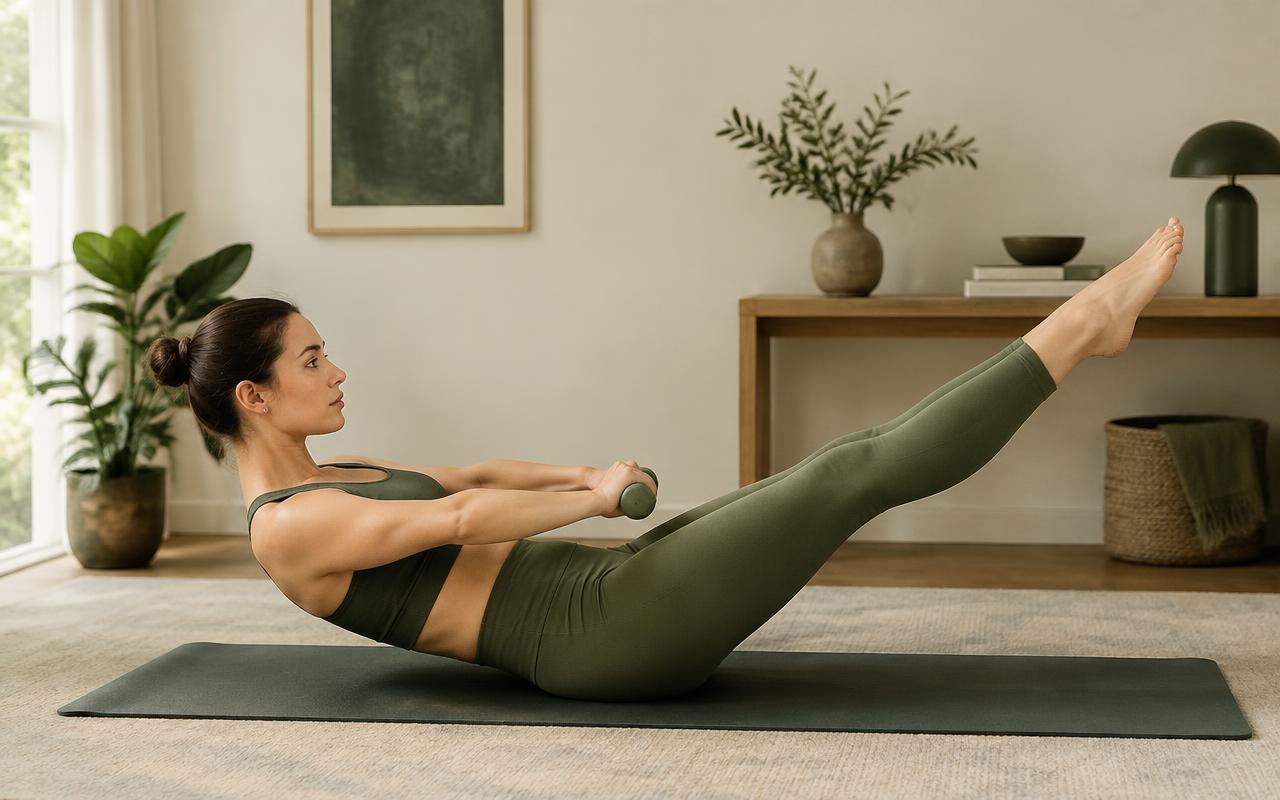
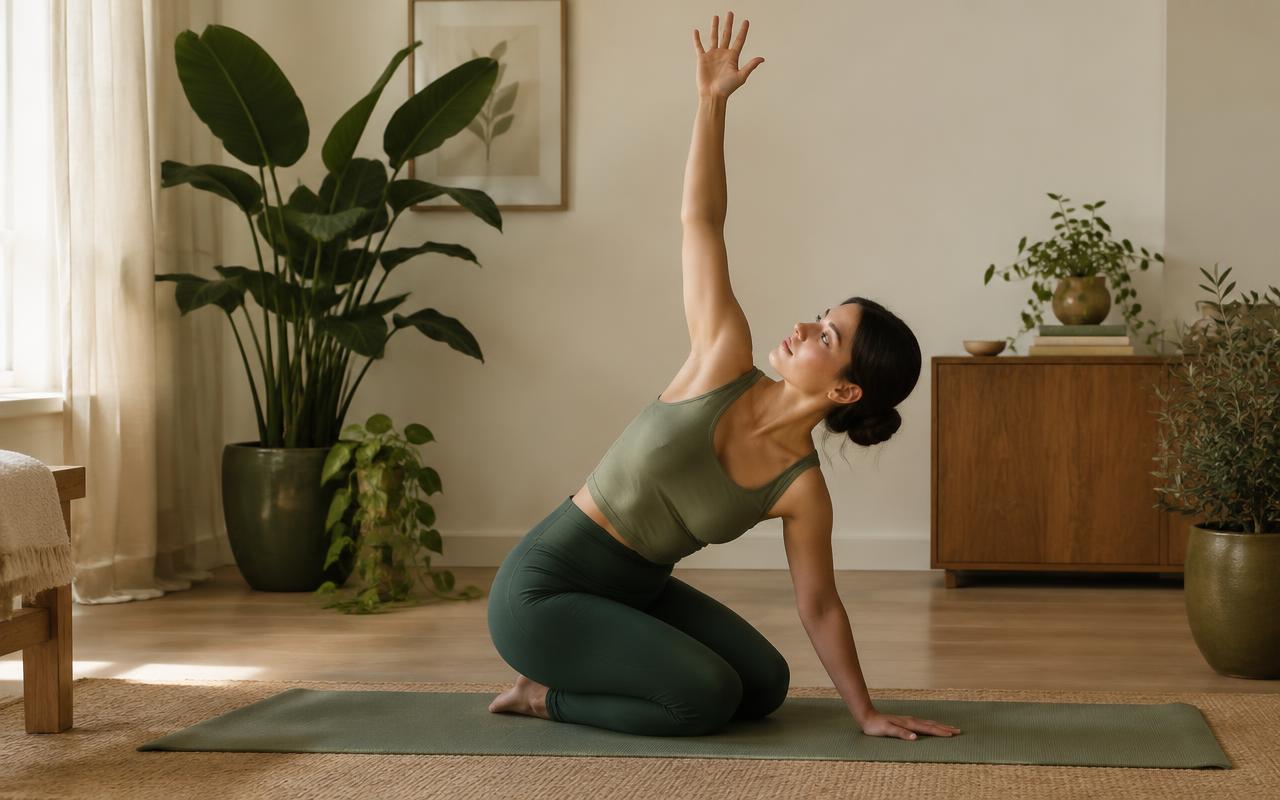
Core Strength Explained: How Your Trunk Helps You Move Through Life
Your core is more than abs. Learn what it is, what “engaging your core” really means, and six practical exercises that connect to everyday tasks.
“Engage your core” might be the most common cue in fitness, and one of the most confusing. Does it mean sucking in your stomach? Squeezing as hard as you can? Doing hundreds of crunches? This article explains what the core really is, what it does in everyday life, and how to train it in a practical, sensible way.
The core, explained simply
Your core is a group of muscles that work together to control your trunk and pass force between your upper and lower body. It is not one muscle. The main members of the team are:
- The abdominal wall: the muscles at the front and sides of your trunk, including the deep layer that wraps around you like a belt.
- The back muscles: the muscles running along the spine that help you stay upright and control bending.
- The diaphragm: your main breathing muscle, which forms the top of the trunk.
- The pelvic floor: a group of muscles forming the base of the trunk.
- The hip muscles: including the glutes, which connect the trunk to the legs.
Strength, endurance, stability and abs are not the same thing
- Core strength: how much force the trunk muscles can produce or resist, for example when lifting something heavy.
- Core endurance: how long they can keep working, for example during a long walk carrying a bag.
- Trunk stability: the ability to keep the trunk steady when something tries to move it, such as a heavy door or a bump on a bus.
- Movement control: the ability to move the trunk smoothly and in the way you intend.
- Visible abdominal definition: mainly a matter of body fat levels and genetics.
Having visible abs does not automatically mean someone has excellent control when lifting, carrying or balancing. And you do not need visible abs to have a strong, capable core.
Why core control matters in real life
Most daily tasks involve the whole body working as a chain, with the trunk in the middle:
- Lifting a suitcase from the floor: the legs and hips drive the lift while the trunk keeps the spine in a position you can control.
- Carrying shopping bags on one side: the muscles on the opposite side of the trunk work to stop you leaning over.
- Picking up a child or moving a box: you bend, grip and stand while the weight is away from your body.
- Reaching overhead: the trunk keeps the ribs from flaring and the lower back from arching hard as the arms rise.
- Walking while carrying something: the trunk manages a load that shifts with every step.
- Getting up from the floor: the trunk links each stage, from rolling to kneeling to standing.
- Stepping over an obstacle: the trunk and hips keep you balanced while one foot leaves the ground.
What does “core engagement” actually mean?
Engaging your core usually means creating some tension around the trunk so it can support the movement. Bracing means gently tightening the muscles all the way around your middle, as if preparing for a light nudge, without sucking your stomach in.
Breathing matters too. Under effort, many people hold their breath, shrug their shoulders, or arch their backs strongly. A useful starting habit is to breathe out during the hardest part of the movement and keep the breath moving the rest of the time.
The right amount of tension depends on the task. Carrying a heavy dumbbell needs more bracing than a gentle spine-rotation stretch. There is no single perfect posture that everyone must hold for every movement; bodies vary, and good movement allows some natural motion.
Practical exercises for core control
These are general exercise examples, not a personalised treatment for back pain. Move slowly, breathe, and choose the easiest version that still feels like work.
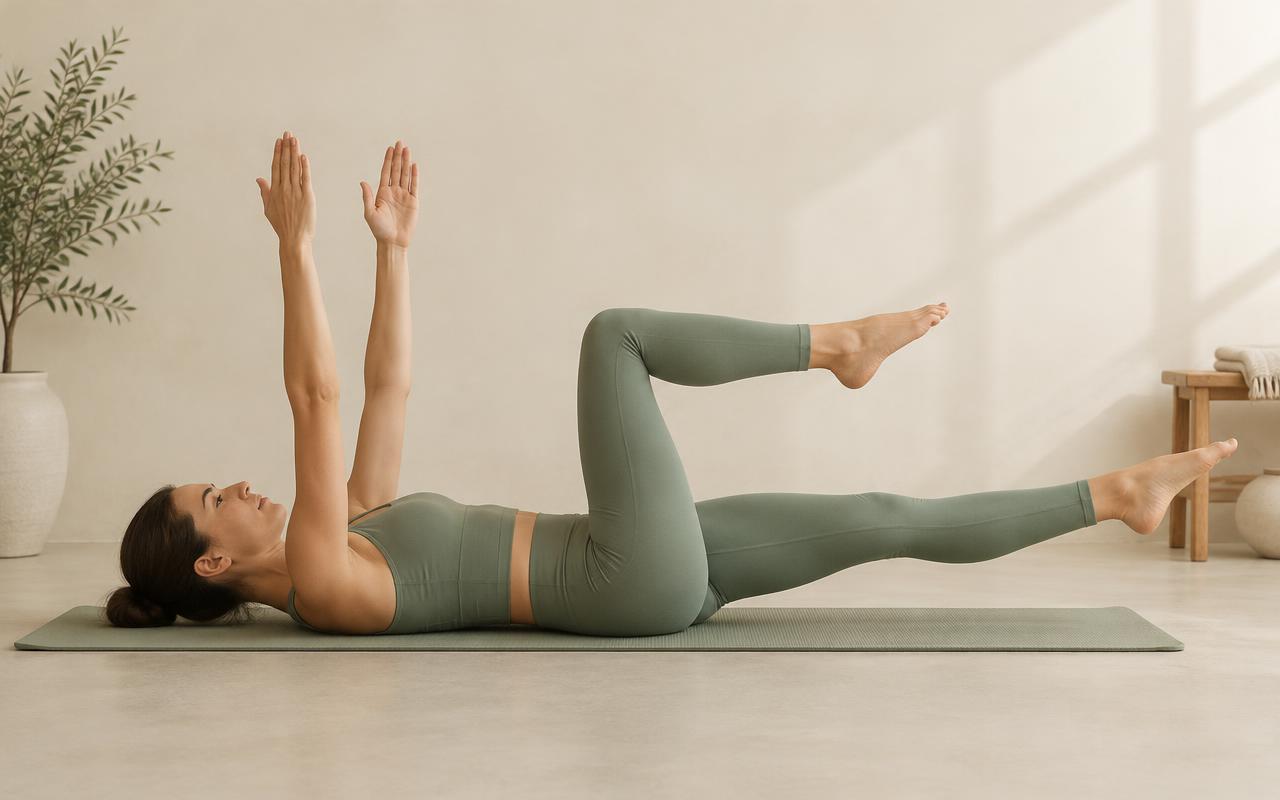
Dead bug
- What it trains
- Keeping the trunk steady while the arms and legs move.
- How to do it
- Lie on your back, knees bent over hips, arms pointing to the ceiling. Slowly lower one heel towards the floor and return. Alternate sides.
- What to notice
- Whether your lower back lifts sharply off the floor or your breath stops.
- Make it easier
- Keep feet on the floor and slide one heel away at a time, or move only the arms.
- Everyday link
- Moving your limbs while your trunk stays controlled, such as reaching while lying down or getting out of bed.
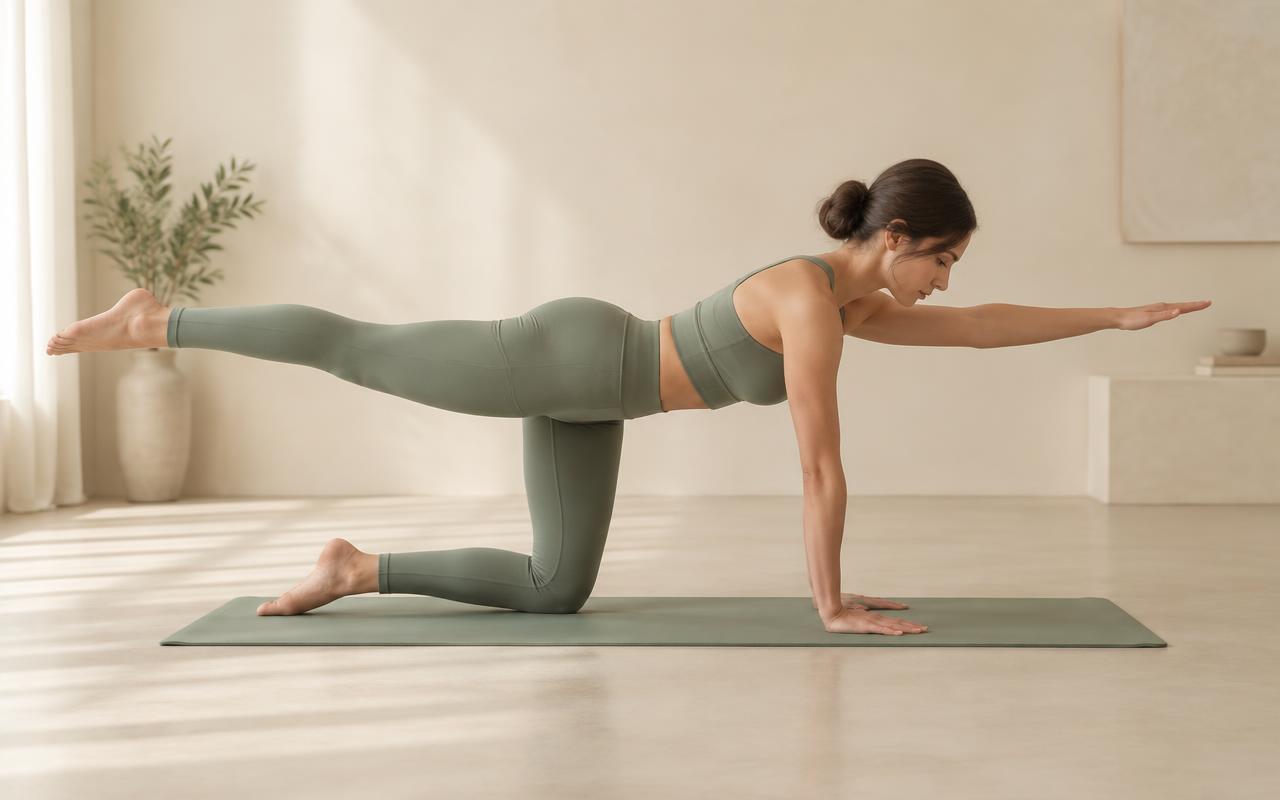
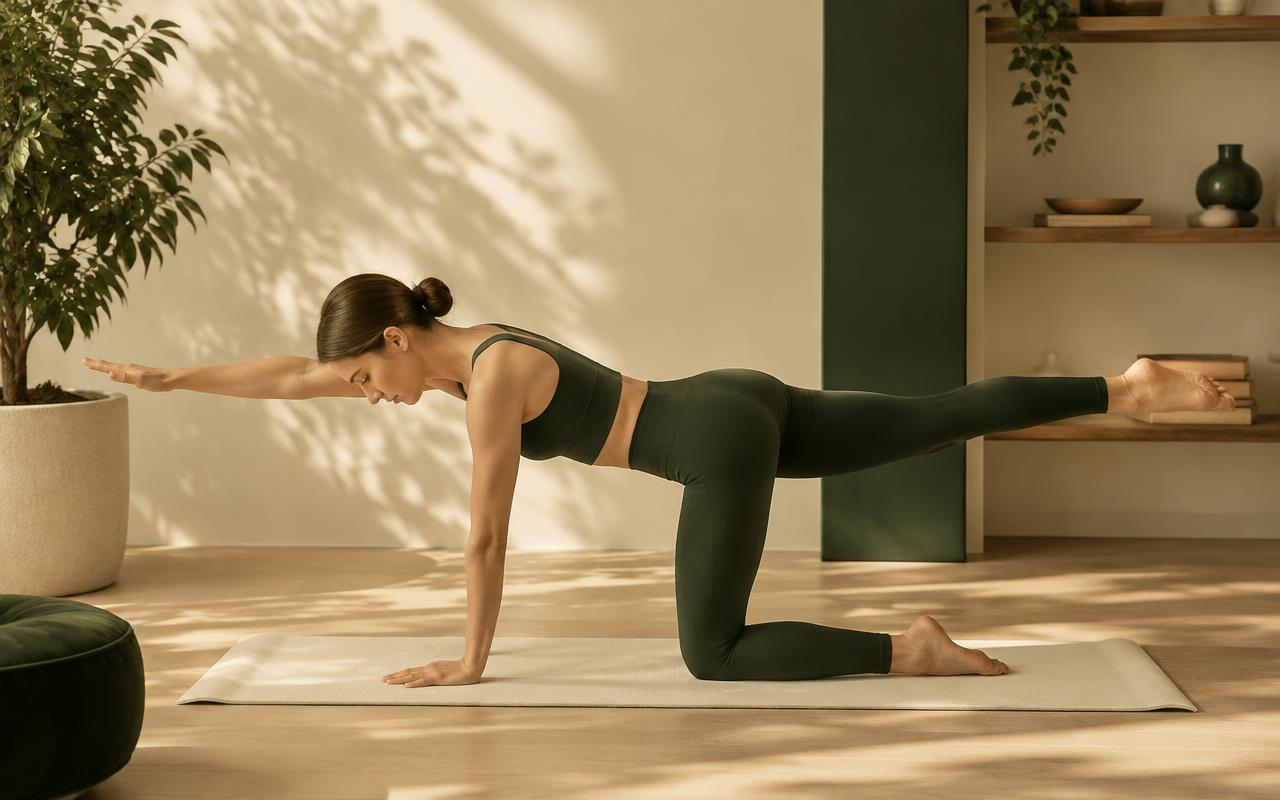
Bird dog
- What it trains
- Balance and trunk control on hands and knees.
- How to do it
- On hands and knees, slowly reach one arm forward and the opposite leg back. Pause, return, swap sides.
- What to notice
- Whether the hips tip to one side or the back sags.
- Make it easier
- Move only an arm or only a leg, or slide the leg along the floor.
- Everyday link
- Staying balanced when you shift weight, such as kneeling to clean or garden.
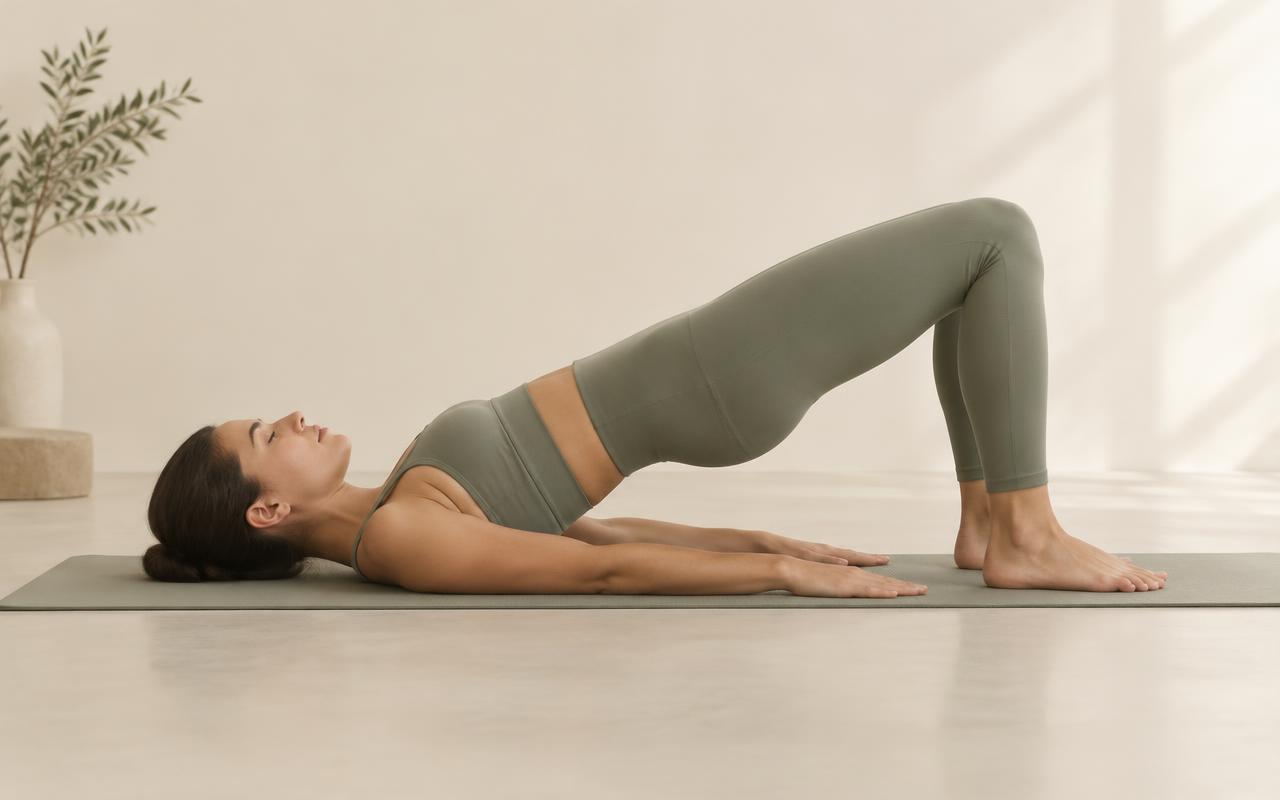
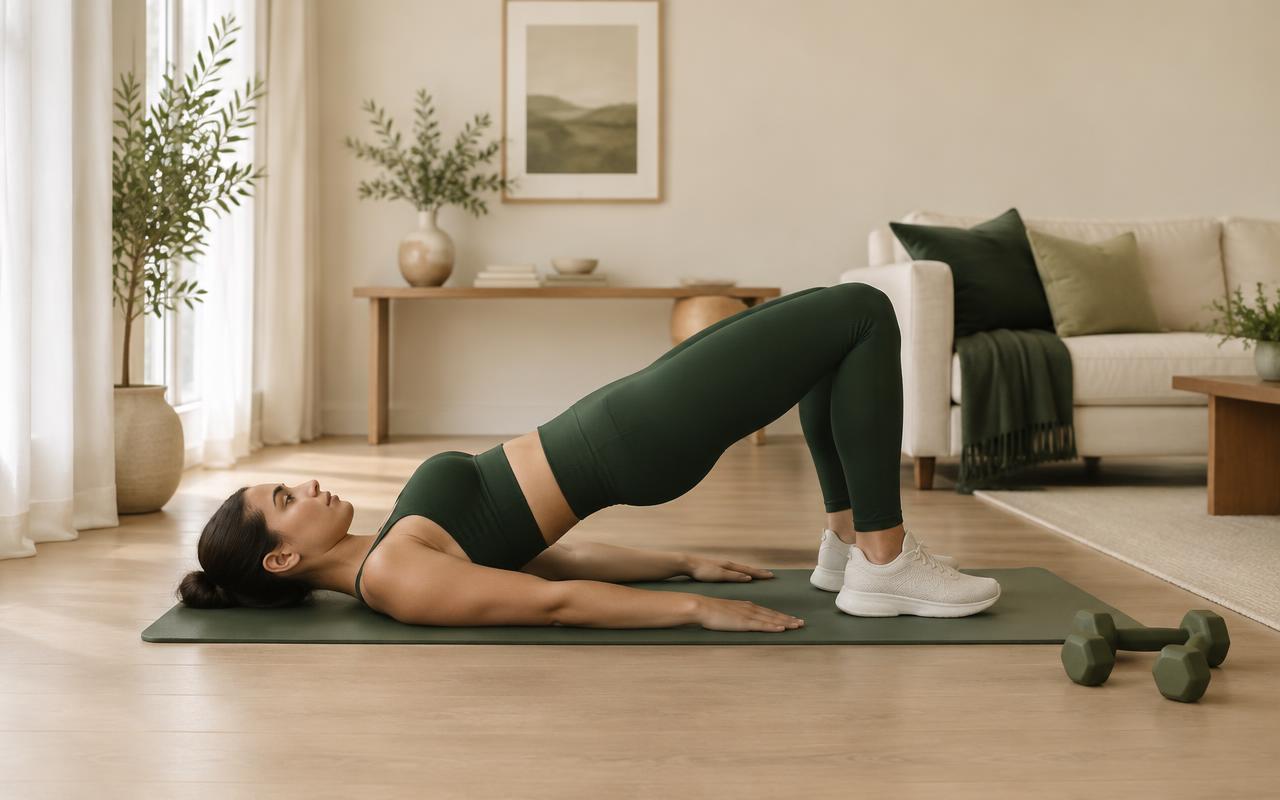
Glute bridge
- What it trains
- Hip and glute strength with trunk control.
- How to do it
- Lie on your back, knees bent, feet flat. Press through your feet to lift your hips, pause, and lower slowly.
- What to notice
- Whether you feel the work in your hips and thighs rather than mainly in your lower back.
- Make it easier
- Lift only a short distance and hold for a breath.
- Everyday link
- Driving with your hips when standing up, climbing stairs or lifting.
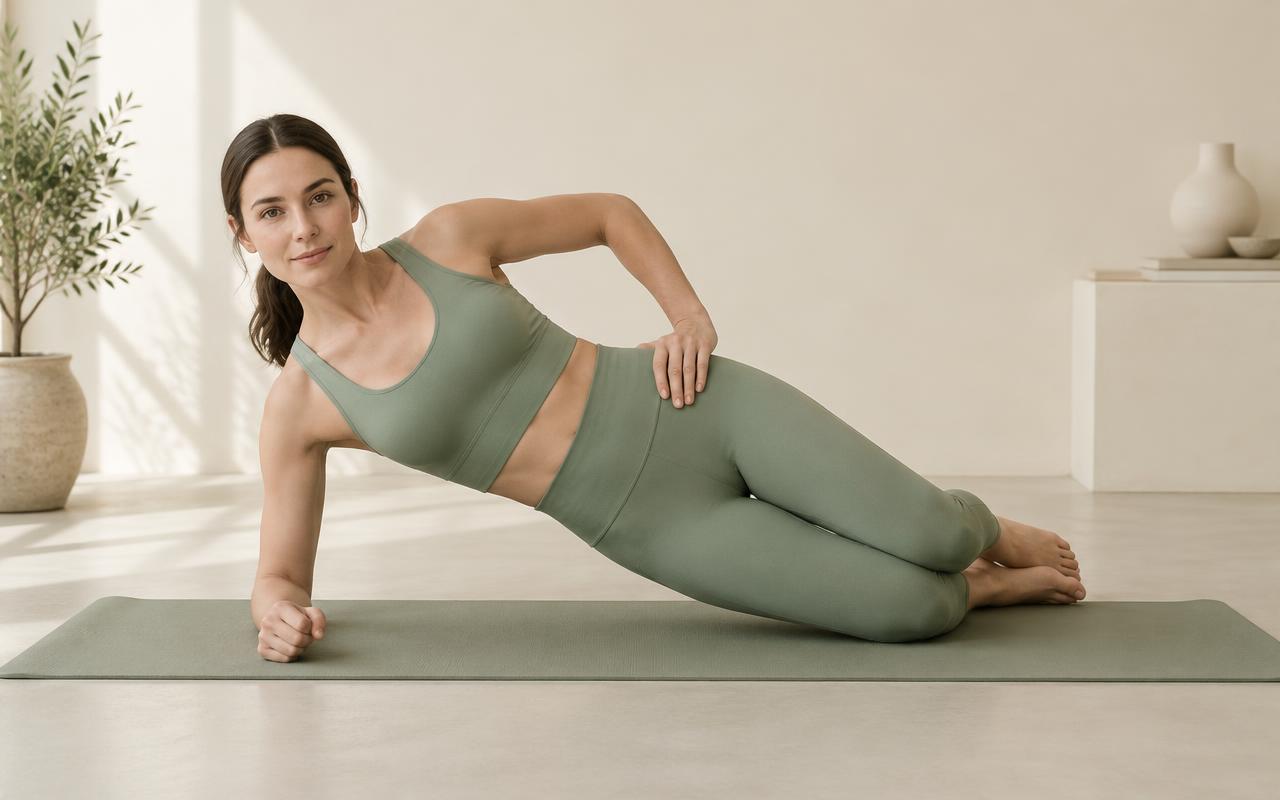
Modified side plank
- What it trains
- The muscles along the side of your trunk.
- How to do it
- Lie on your side with knees bent, forearm under your shoulder. Lift your hips so you form a line from knees to head. Hold for a few breaths.
- What to notice
- Whether you are sinking into your shoulder or rolling backwards.
- Make it easier
- Do it standing, leaning your forearm against a wall.
- Everyday link
- Staying upright when carrying something on one side.
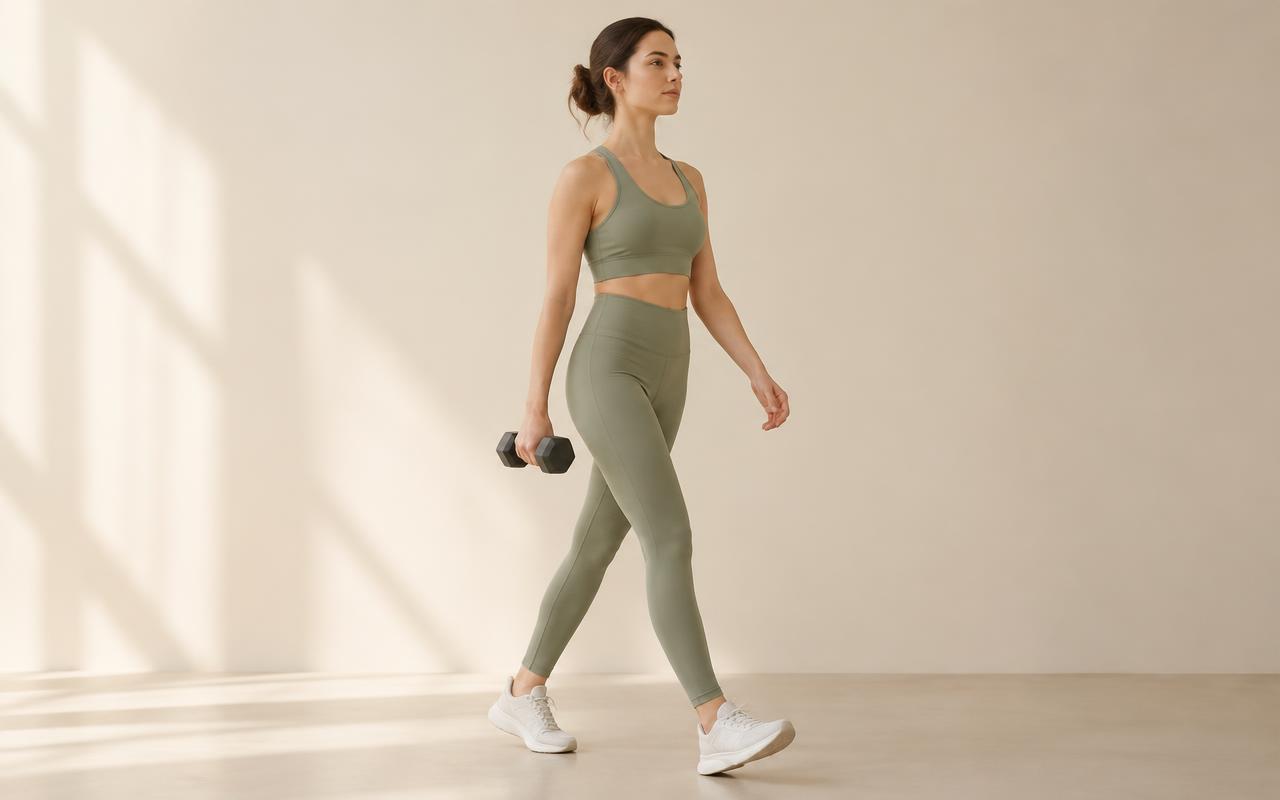
Suitcase carry (if you have a dumbbell)
- What it trains
- Resisting sideways bending while walking.
- How to do it
- Hold one dumbbell at your side and walk slowly for 20–30 steps, standing tall. Swap hands.
- What to notice
- Whether you lean towards or away from the weight.
- Make it easier
- Use a lighter weight or a filled shopping bag, and walk a shorter distance.
- Everyday link
- Carrying groceries, a bag or a bucket.
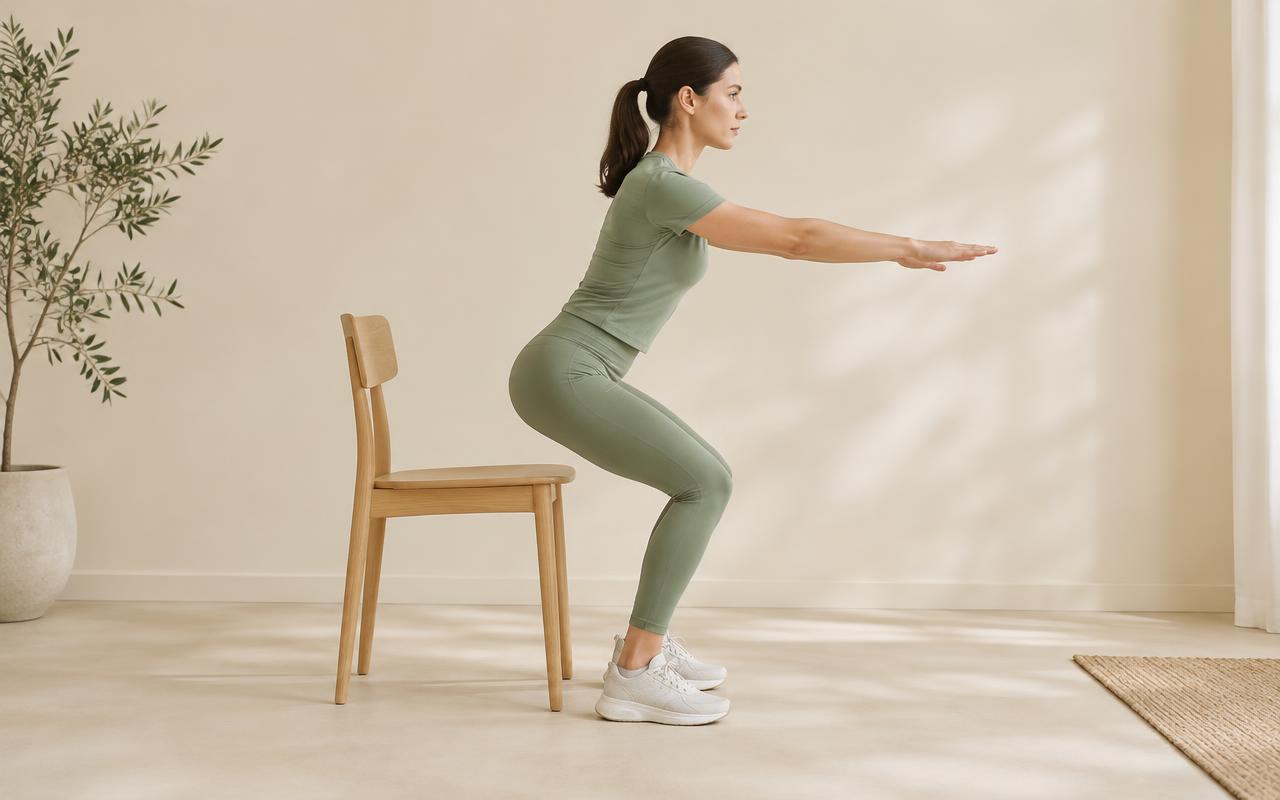
Controlled sit-to-stand
- What it trains
- Leg strength with trunk control.
- How to do it
- Sit near the front of a sturdy chair, feet flat. Lean forward slightly and stand up, then lower slowly back down.
- What to notice
- Whether you drop into the chair at the end or push off with your hands.
- Make it easier
- Use a higher chair or light hand support.
- Everyday link
- Standing up from chairs, sofas and the car.
Does core exercise prevent back pain?
Back pain is very common, and exercise is often part of how it is managed. A large Cochrane review found moderate-certainty evidence that exercise therapy reduces pain for people with chronic low back pain compared with no treatment or usual care, though the average effect was modest and no single type of exercise stood out as clearly best.[1]
UK guidance from NICE also recommends considering group exercise programmes, including approaches such as strengthening, stretching, mind-body exercise, or a combination, for managing low back pain.[2]
So exercise can be useful, but no core exercise guarantees that you will avoid back pain or that it will go away. If you have severe, persistent or worsening symptoms, or pain with other worrying signs, get a proper medical assessment.
A simple beginner routine
Try this two or three times a week as a starting example. Rest for 30–60 seconds between exercises.
- Glute bridge: 2 sets of 8–10.
- Dead bug (or the easier heel-slide version): 2 sets of 5 per side.
- Bird dog: 2 sets of 5 per side.
- Modified side plank: 2 holds of 3–5 breaths per side.
- Controlled sit-to-stand: 2 sets of 8.
- Suitcase carry: 2 walks per side, if you have a dumbbell.
When it feels comfortable for two sessions in a row, add a repetition or two, slow the lowering phase, or move to a slightly harder version. Muscle-strengthening work on at least two days a week is part of general public-health guidance.[3],[4]
If you would like a routine built around your body and goals, explore our personalised online coaching.
References and further reading
- [1] Hayden JA, et al. (2021). Exercise therapy for chronic low back pain. Cochrane Database of Systematic Reviews. https://pubmed.ncbi.nlm.nih.gov/34580864/
- [2] National Institute for Health and Care Excellence (NICE). Low back pain and sciatica in over 16s: assessment and management (NG59). https://www.nice.org.uk/guidance/ng59
- [3] NHS. Strength exercises. nhs.uk. https://www.nhs.uk/live-well/exercise/strength-exercises/
- [4] World Health Organization. Physical activity (fact sheet). who.int. https://www.who.int/news-room/fact-sheets/detail/physical-activity