Pilates Explained: The Story of Contrology and Why Movement Control Matters
Where Pilates came from, what Joseph Pilates meant by Contrology, and how controlled, attentive movement can make everyday strength training more thoughtful.
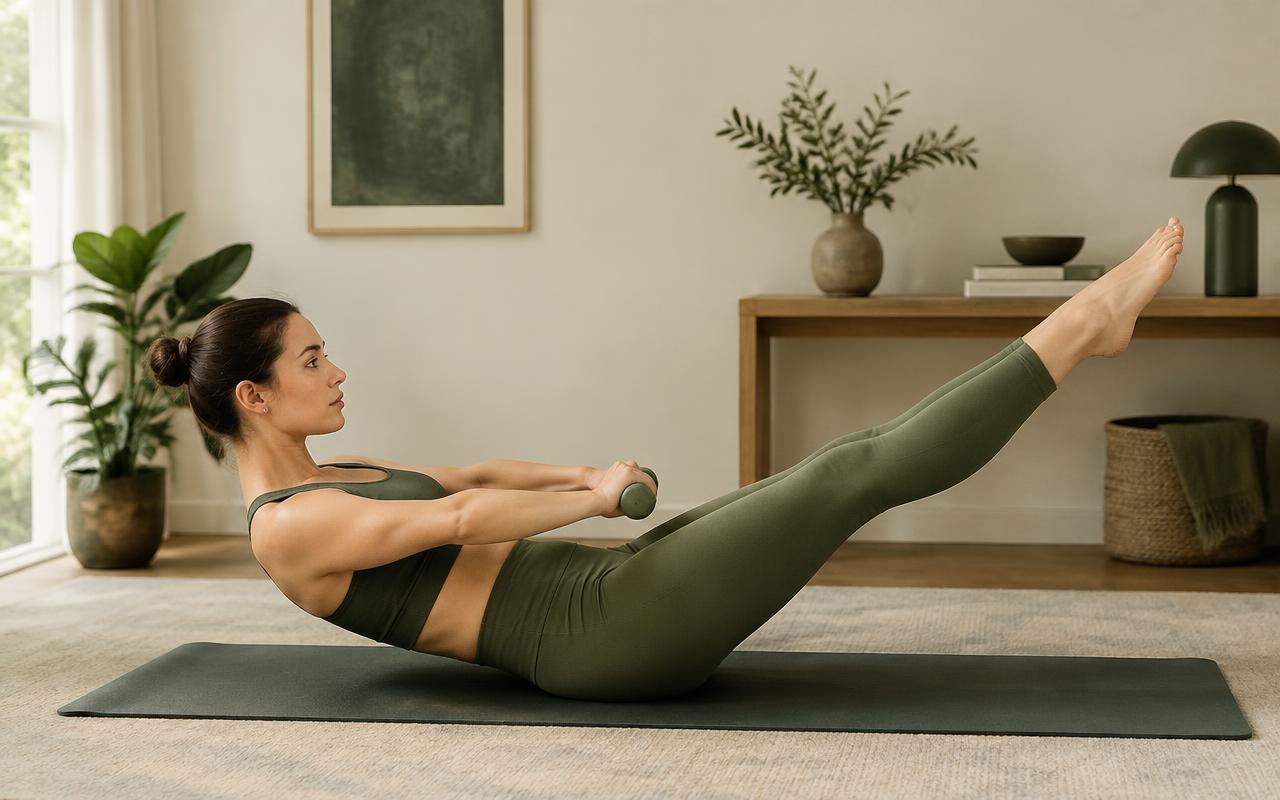
Pilates is everywhere now: in studios, on social media, in physiotherapy clinics and in living rooms. Yet many people who try it are not sure what it actually is, where it came from, or why teachers keep talking about “control”. This article tells the story of the method its creator called Contrology, explains the ideas behind it, and shows how those ideas can make everyday strength training more thoughtful.
The origins of Pilates
Joseph Hubertus Pilates was born in Mönchengladbach, Germany, in 1883. According to the Pilates Method Alliance, he began his career as a teacher of “physical culture”, a broad movement of the time that promoted health through exercise, athletic skill and mental discipline.[1]
In 1913 he travelled to England. When the First World War began in 1914, he was held as an “enemy alien” and interned on the Isle of Man, where he was one of several physical culturists who led daily exercise for people in the camp. The Pilates Method Alliance describes this period as a time when he developed his ideas on fitness and gained experience as a teacher.[1]
You may have heard stories that he rigged hospital bed springs to help injured patients exercise, or that his methods kept every one of his fellow internees healthy during the 1918 flu pandemic. These stories are widely repeated, but they are hard to confirm from historical records, so it is best to treat them as part of the legend rather than established fact.
After the war he returned to Germany, and in the late 1920s he introduced his system in the United States. He opened a studio in New York with Clara, who worked alongside him for decades and is recognised as a teacher in her own right.[1],[2]
The New York studio and the dancers
By the late 1930s, New York was a centre for modern dance, and many dancers came to the studio, often to recover from injuries and keep training. Well-known figures such as George Balanchine and Martha Graham are recorded as studying with him and referring colleagues. Several of these dancers went on to teach the method themselves, which is a big part of why it spread.[1]
He published two books: Your Health (1934) and Return to Life Through Contrology (1945). He also designed a range of equipment, the most famous of which became the Universal Reformer.[1]
What was Contrology?
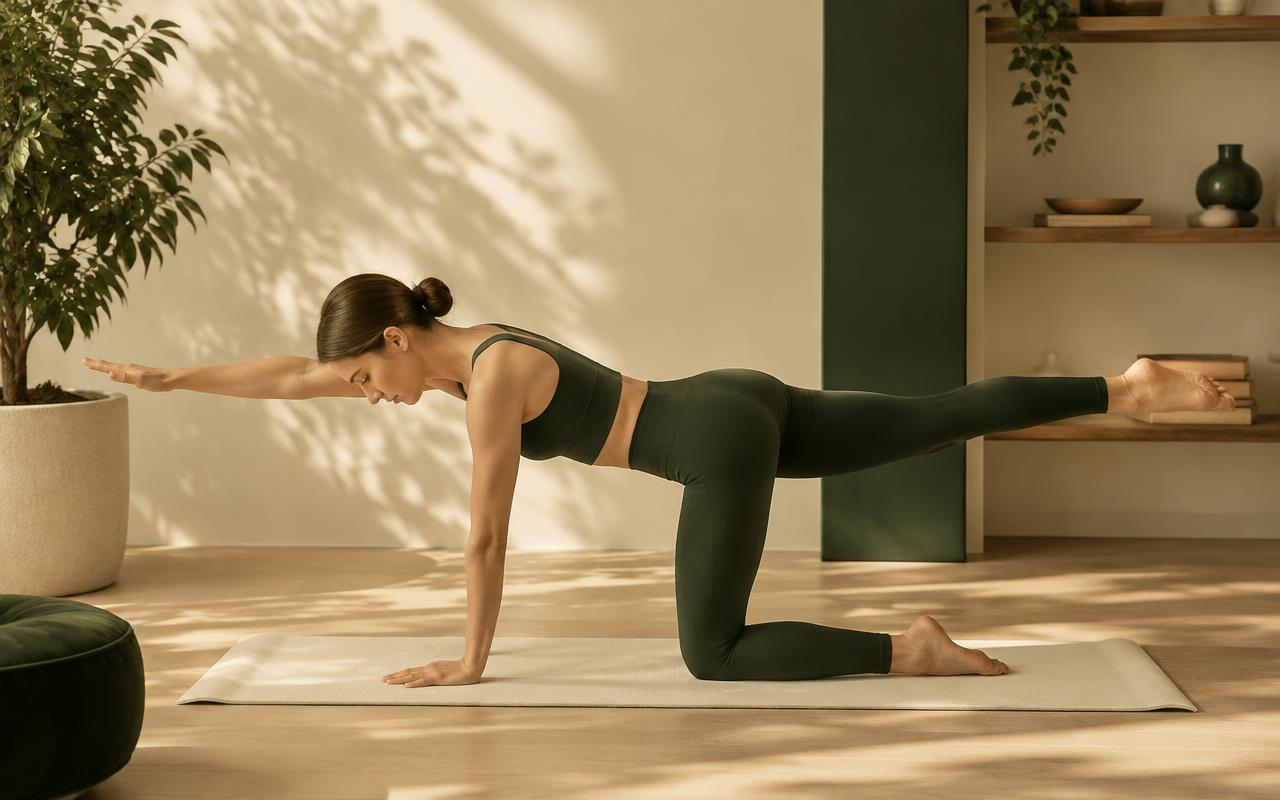
Joseph Pilates called his method Contrology. The name says a lot: the aim was not to move as fast as possible or do as many repetitions as possible, but to move deliberately, with the mind directing the body.
Teachers commonly describe Pilates using a set of principles. The exact list varies between schools, but these six appear often:
- Control: every part of the movement is guided, including the lowering phase.
- Concentration: attention stays on what the body is doing.
- Breathing: the breath is coordinated with the movement rather than held.
- Precision: small details, such as where the pelvis or ribs are, matter.
- Flow: movements link smoothly instead of jerking from one position to the next.
- Centering: movement is organised around a stable, well-supported trunk.
It is worth knowing that modern Pilates is not one single thing. Some teachers follow the original sequence closely (often called classical Pilates); others adapt the exercises using modern exercise science (often called contemporary Pilates). A class in one studio can look quite different from a class in another.
Why control matters more than repetitions
Imagine two people doing ten squats. The first drops down quickly, bounces at the bottom and pushes up as fast as possible, eyes on the phone. The second lowers slowly, keeps their weight balanced across the whole foot, stops at a depth they can control, and stands up smoothly.
Both did ten squats. But the second person practised something extra: they noticed where their weight was, chose an appropriate depth, and controlled the movement in both directions. That awareness carries over to daily life, such as lowering yourself onto a low sofa without “dropping” the last few centimetres.
Moving with control also helps you notice habits you might otherwise miss:
- Rushing through the part of a movement that feels difficult.
- Shifting weight onto one side when you get tired.
- Holding your breath during effort.
- Moving into a range you cannot yet control, such as letting the lower back arch hard when reaching overhead.
None of these are “wrong” in a moral sense. They are simply information. Once you notice them, you can adjust: slow down, reduce the range, lighten the load, or breathe.
Pilates and the core
In Pilates you will often hear about the “centre” or the “core”. The core is not the same as visible abdominal muscles. It is a team of muscles around the trunk: the abdominal muscles, the muscles along the back, the diaphragm (your main breathing muscle) at the top, the pelvic floor at the bottom, and the muscles around the hips. Together they help support the trunk and pass force between the upper and lower body.
Think about everyday tasks:
- Lifting a suitcase into the boot of a car.
- Reaching into a high cupboard without leaning back heavily.
- Rolling to your side and getting out of bed.
- Carrying a heavy grocery bag in one hand without tipping sideways.
- Lifting a dumbbell overhead while keeping your ribs and pelvis steady.
Each of these needs the trunk to work, but not in the same way. Core control is task-specific: lifting something heavy calls for more firmness, while a gentle mobility exercise needs much less. The body does not need to stay rigid all the time, and staying rigid can actually make smooth movement harder.
Mat Pilates, equipment and Pilates-inspired training
Mat Pilates uses the floor and your own bodyweight, sometimes with small props such as a ring or a band. Equipment-based Pilates uses apparatus like the Reformer, a sliding carriage with springs that can make exercises easier or harder.
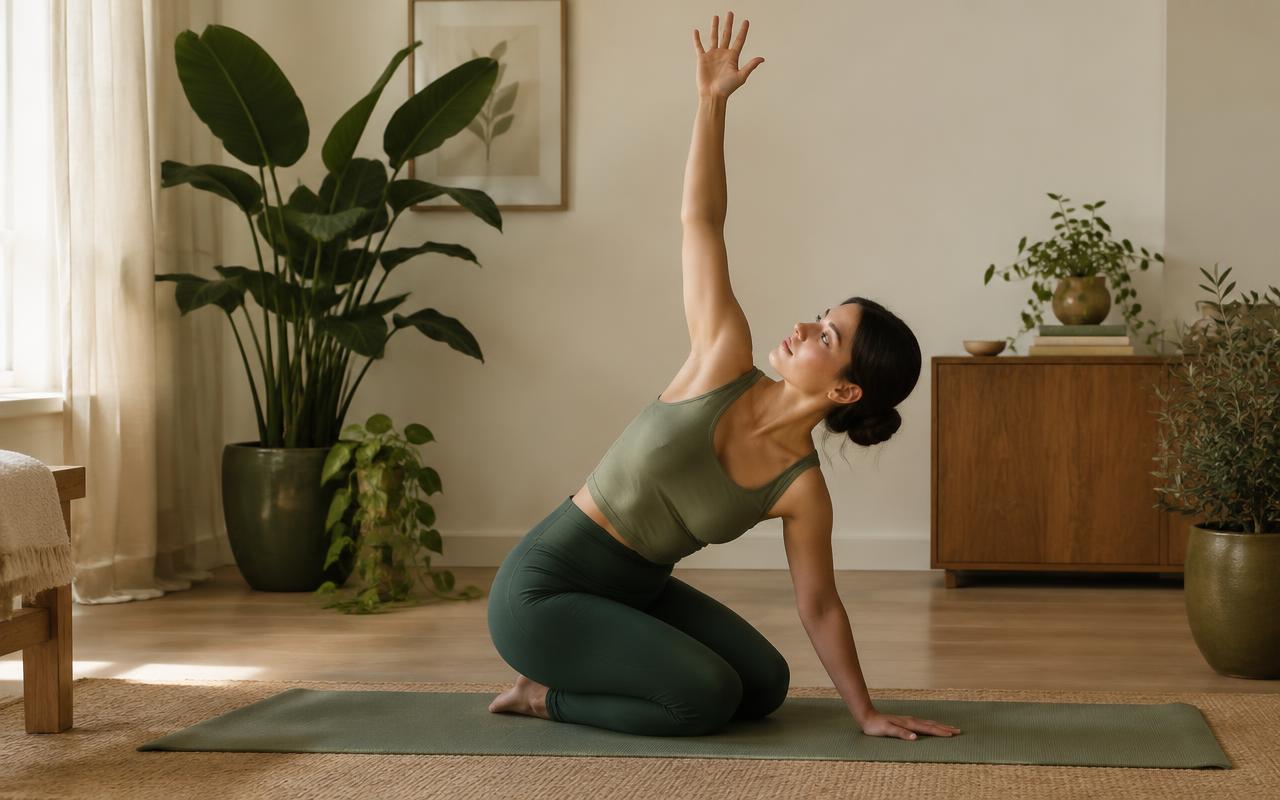
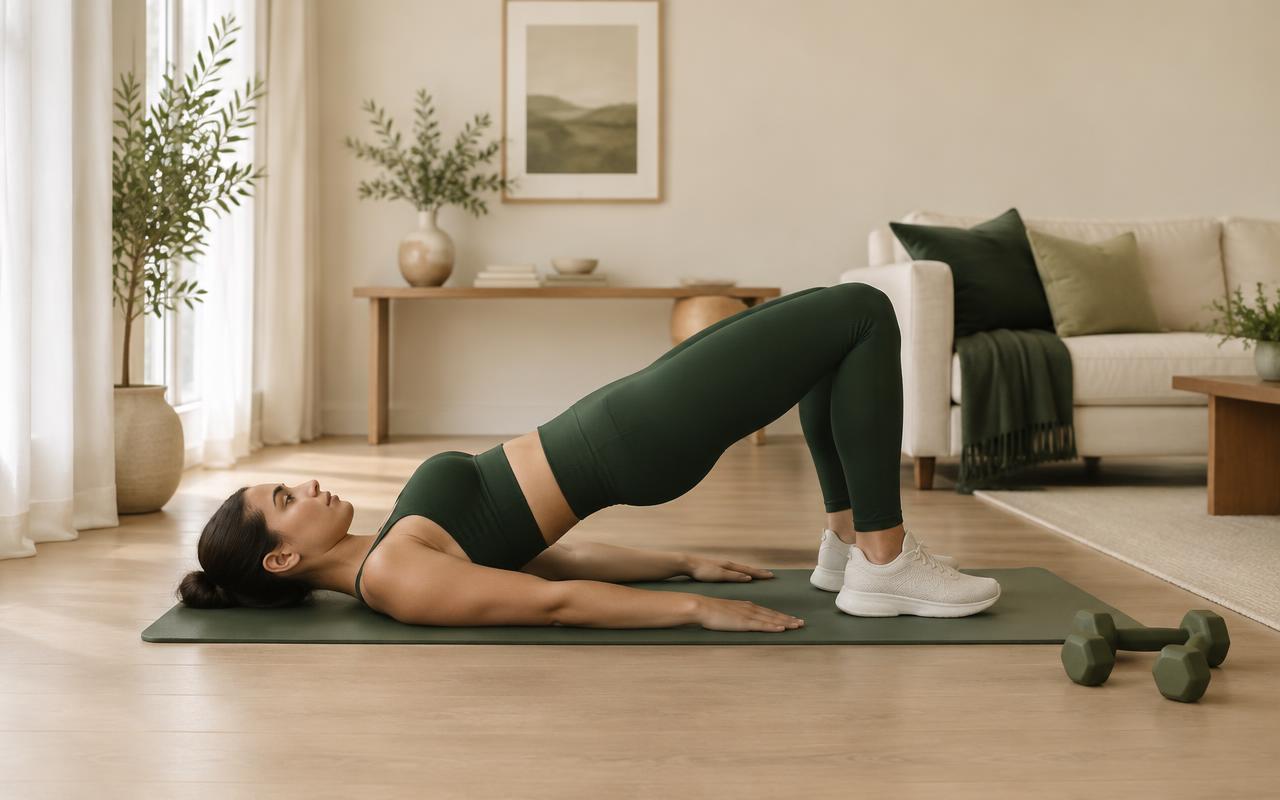
Pilates-inspired training borrows the principles of Pilates (control, breathing, precision and attention) and applies them to a wider mix of movement. At STHIRA, that means strength training with bodyweight and dumbbells, mobility work and mindful movement, coached with the same focus on quality. It is not traditional apparatus-based Pilates, and we describe it honestly as Pilates-inspired.
The approaches complement each other. Dumbbells make it easier to add resistance progressively, which is important for building strength. Pilates-style attention helps you use that resistance well.
What can people realistically expect?
Research on Pilates suggests it can help with things like balance and physical performance in some groups, particularly older adults. For example, two systematic reviews (studies that combine the results of many trials) found improvements in measured balance and physical performance in older adults. They also noted that the certainty of the evidence ranged from very low to moderate, so the results should be read with care.[3],[4]
In practice, people commonly report better movement awareness, more muscular endurance, and feeling more at ease in their bodies. How much changes depends on the type of exercises, how often you train, your starting point, and what other activity you do. Pilates is one useful tool alongside the general recommendation to stay active and include muscle-strengthening work on at least two days a week.[5]
If you would like to experience Pilates-inspired strength training with coaching that pays attention to how you move, explore our online 1:1 coaching and group classes.
References and further reading
- [1] Pilates Method Alliance. History of Pilates. pilatesmethodalliance.org. https://www.pilatesmethodalliance.org/pilates-history
- [2] Pilates Method Alliance. What is Pilates? pilatesmethodalliance.org. https://www.pilatesmethodalliance.org/about-the-pilates-method-what-is-pilates
- [3] Fernández-Rodríguez R, et al. (2021). Pilates improves physical performance and decreases risk of falls in older adults: a systematic review and meta-analysis. Physiotherapy. https://pubmed.ncbi.nlm.nih.gov/34332493/
- [4] de Campos Júnior JF, et al. (2024). Effects of Pilates exercises on postural balance and reduced risk of falls in older adults: a systematic review and meta-analysis. Complementary Therapies in Clinical Practice. https://pubmed.ncbi.nlm.nih.gov/39068875/
- [5] World Health Organization. Physical activity (fact sheet). who.int. https://www.who.int/news-room/fact-sheets/detail/physical-activity