Mobility for Life: Practical Exercises for Everyday Movement and Healthy Ageing
Mobility is range you can use. Seven practical exercises linked to real tasks, from getting up from a chair to getting down to the floor and back.
Mobility is often treated as a fancy word for stretching. But being able to touch your toes is not the same as being able to get down to the floor to play with a child and get back up again with ease. This practical guide explains what mobility really is, why it matters for everyday life at any age, and gives you exercises that connect directly to real tasks.
Mobility, flexibility, strength, balance and coordination
- Flexibility: how far a joint or muscle can be moved, often with help (for example, someone else lifting your leg).
- Mobility: how far you can move a joint yourself, with control, for the task in front of you.
- Strength: how much force your muscles can produce.
- Balance: your ability to keep your body steady over your feet, still or moving.
- Coordination: how well different parts of your body work together in the right order.
Mobility combines all of these. It is the ability to move through the range a task requires, with enough control and strength to feel confident doing it.
Why mobility matters in everyday life
Look at a few ordinary tasks and what they ask of your body:
- Getting up from a low chair: hip and knee bending, leg strength, and shifting your weight forward.
- Climbing stairs: ankle bending, leg strength and balance on one leg.
- Squatting to reach a low shelf: hip, knee and ankle range plus control on the way down and up.
- Turning to look behind you while walking: rotation through the upper back and neck while balancing.
- Reaching overhead to a shelf: shoulder range and trunk control.
- Stepping over a kerb: hip lift, balance and coordination.
- Putting on socks or shoes: hip range and balance, especially if standing.
- Getting down to the floor and back up: almost everything at once.
Bodies are individual. A stiff joint does not always cause a particular pain, and no single exercise fixes everyone's movement. The aim is to practise the abilities these tasks need.
Exercises and their practical uses
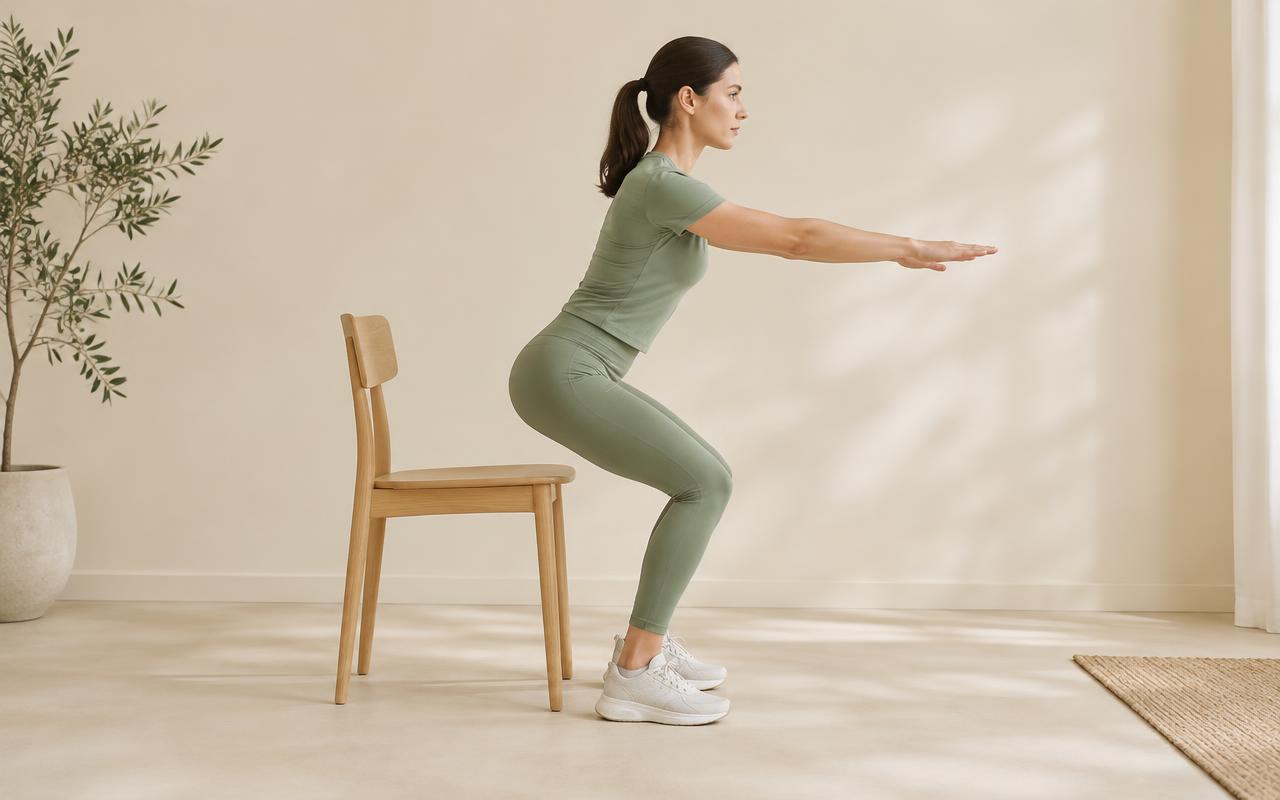
1. Sit-to-stand
- Main purpose
- Practise standing up from a chair and build lower-body strength and confidence.
- Instructions
- Sit near the front of a sturdy chair, feet hip-width apart. Lean slightly forward, press through your feet and stand tall. Sit back down slowly.
- Everyday example
- Getting up from the sofa, the toilet or a car seat.
- Beginner modification
- Use a higher chair, a cushion, or light hand support on the armrests.
- Safety
- Make sure the chair cannot slide. Avoid dropping heavily into the seat.
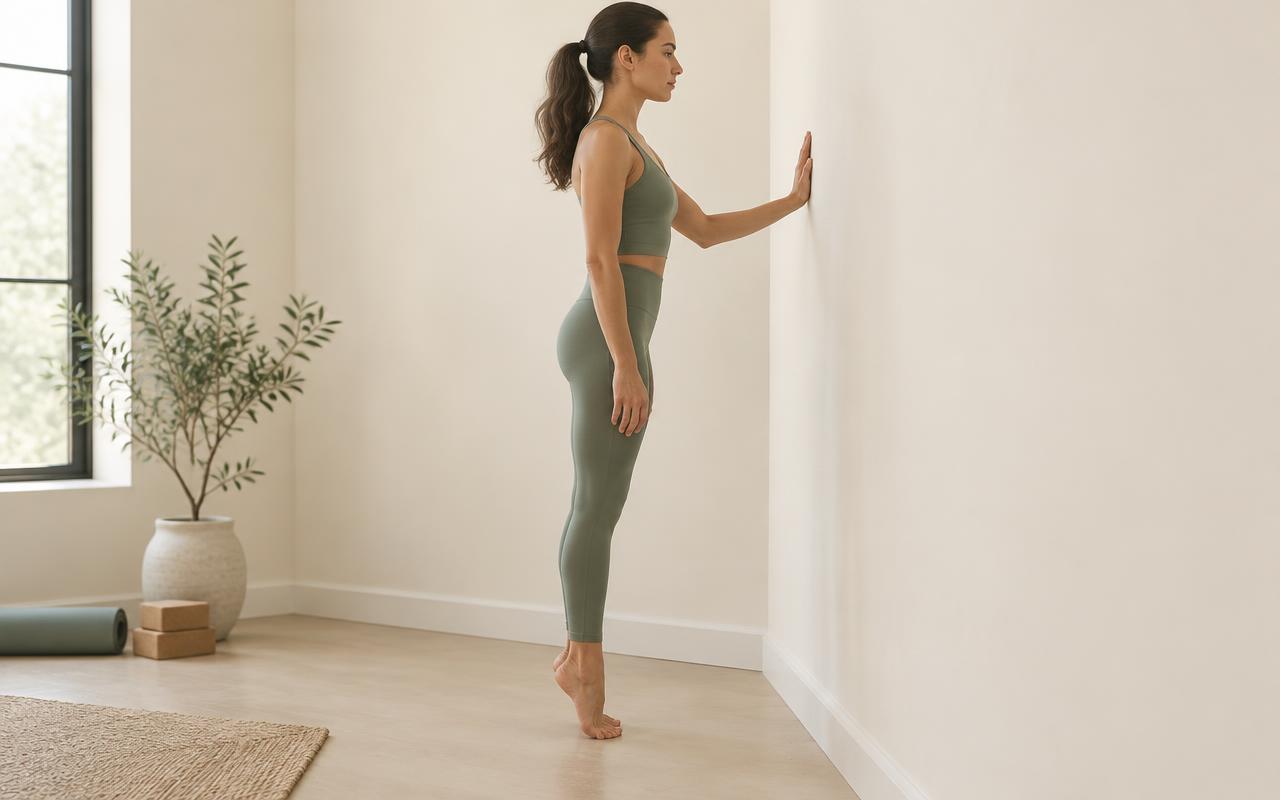
2. Ankle rocks and supported calf raises
- Main purpose
- Improve ankle movement and calf strength for walking, stepping and stairs.
- Instructions
- Ankle rocks: stand facing a wall in a small split stance, and gently move your front knee forward over your toes and back, heel down. Calf raises: hold a counter, rise onto the balls of your feet, then lower slowly.
- Everyday example
- Pushing off with each step and climbing stairs.
- Beginner modification
- Do fewer raises, rise only partway, or sit and lift your heels.
- Safety
- Keep a hand on a stable surface throughout.
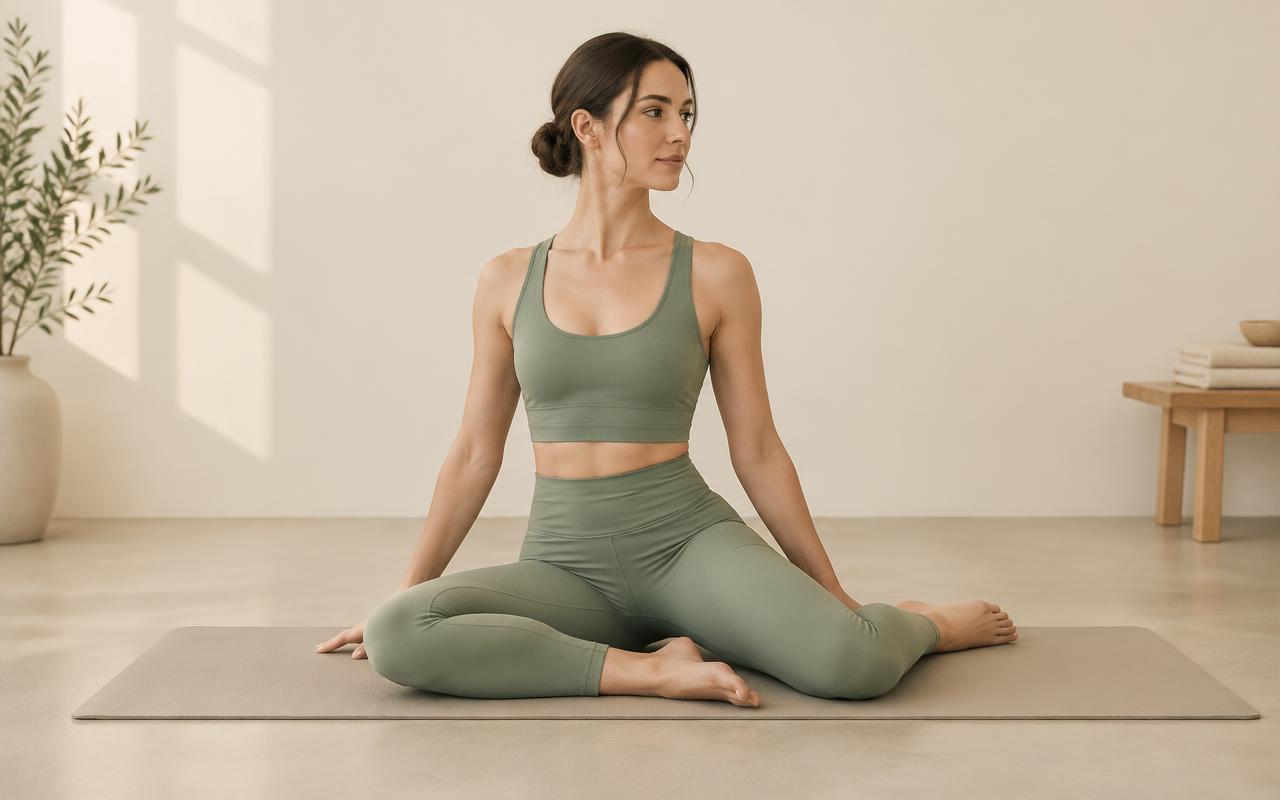
3. Hip mobility and hip strength
- Main purpose
- Help the hips move and stay strong for walking, stepping, bending and changing direction.
- Instructions
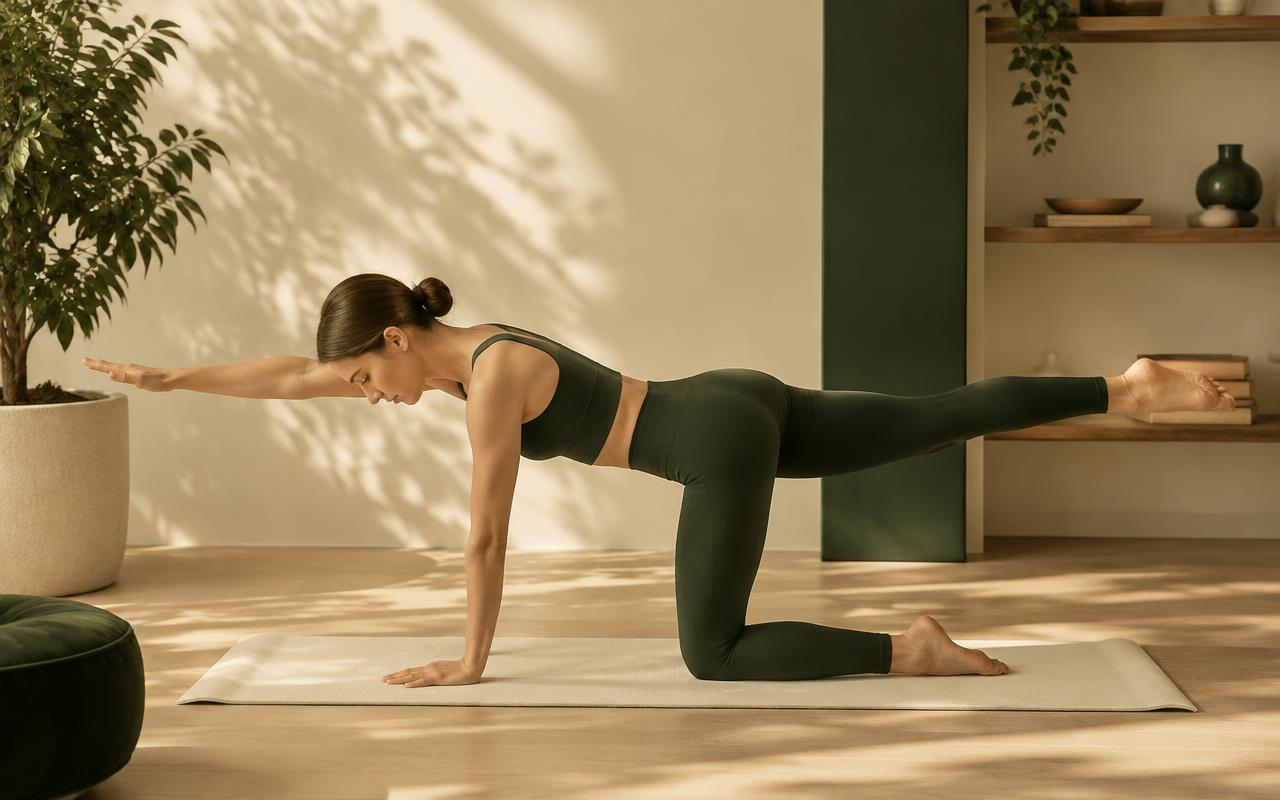
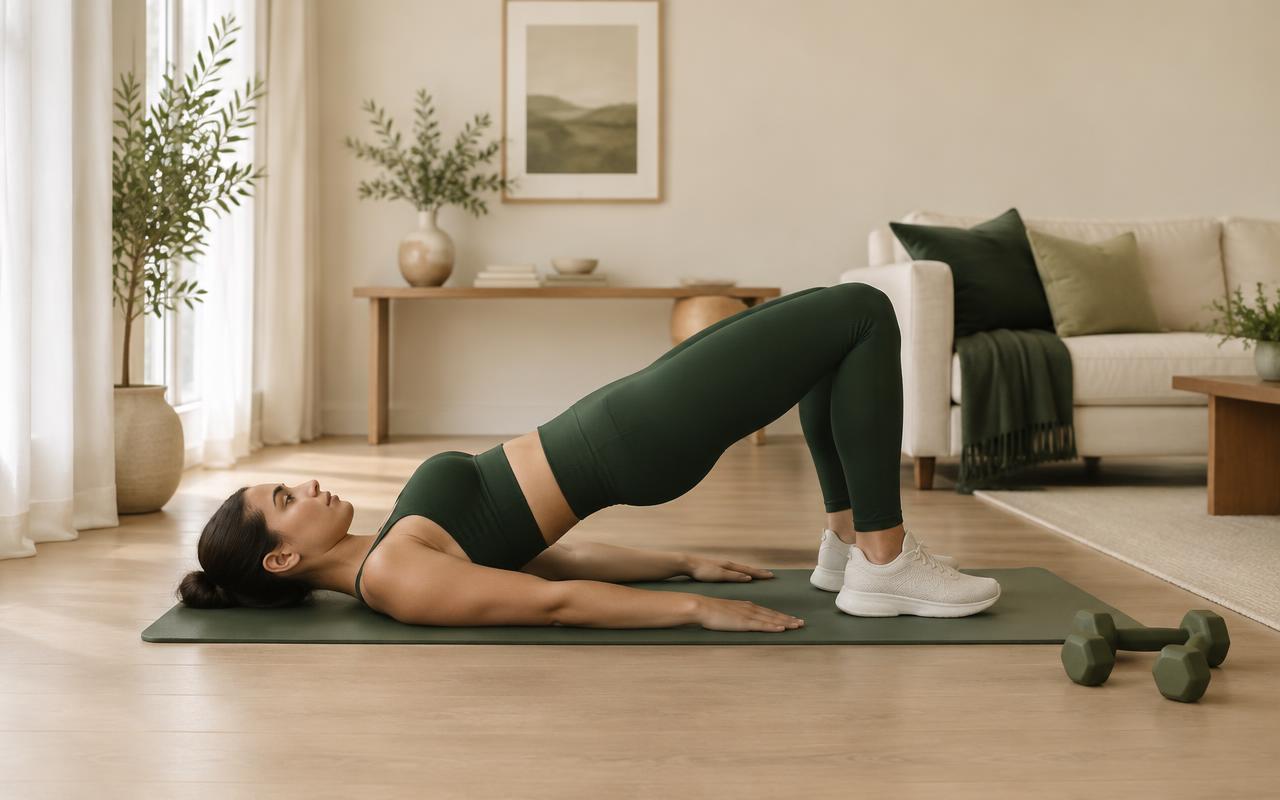
- Half-kneeling hip-flexor stretch: kneel on a cushion with one foot forward, tuck your pelvis slightly and gently shift forward until you feel a stretch at the front of the back hip. Standing hip movements: hold a chair and slowly swing one leg forward and back, then out to the side. Glute bridge: lie on your back, knees bent, and lift your hips.
- Everyday example
- Taking longer strides, stepping sideways out of someone's way, and bending to pick something up.
- Beginner modification
- Do the hip stretch standing with one foot on a step, and keep bridges small.
- Safety
- Stretching can improve comfort or range for some people, but strength training matters too. Pair them.
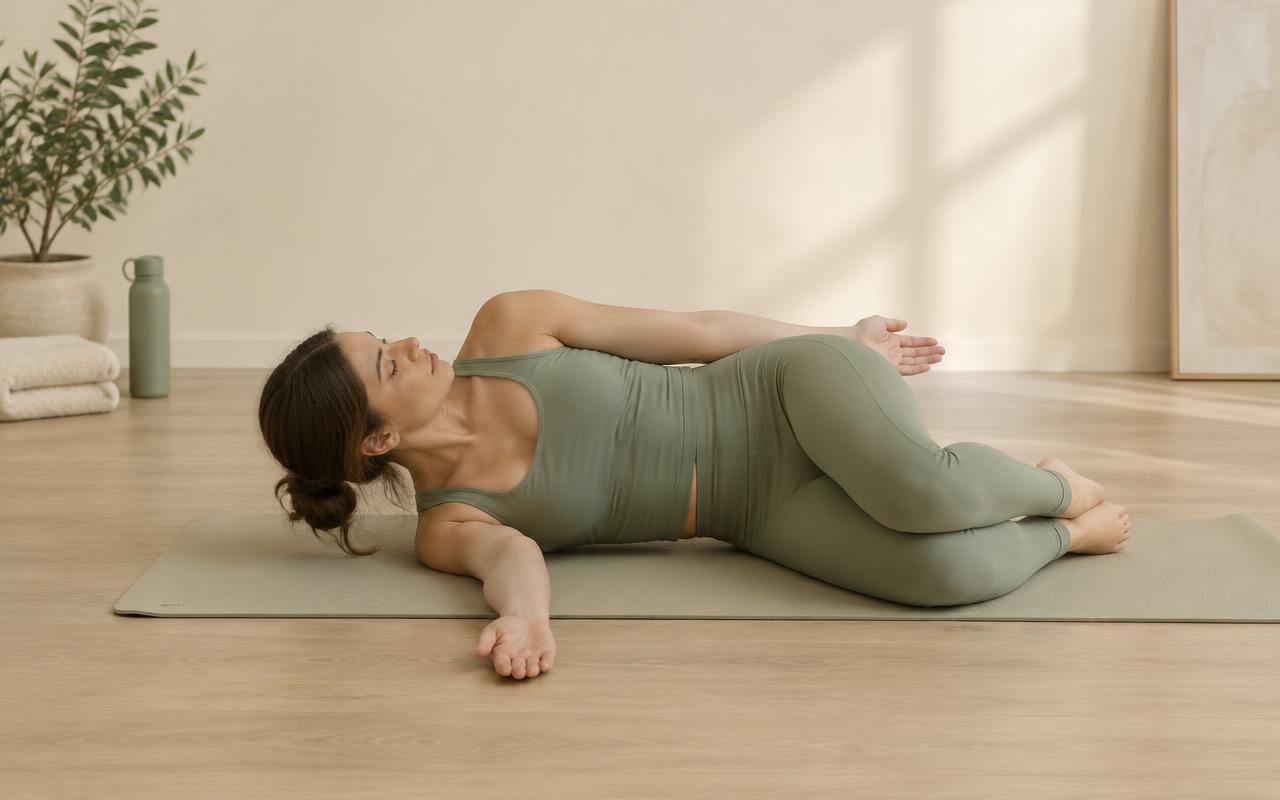
4. Thoracic (upper back) rotation
- Main purpose
- Practise turning through the upper back with control.
- Instructions
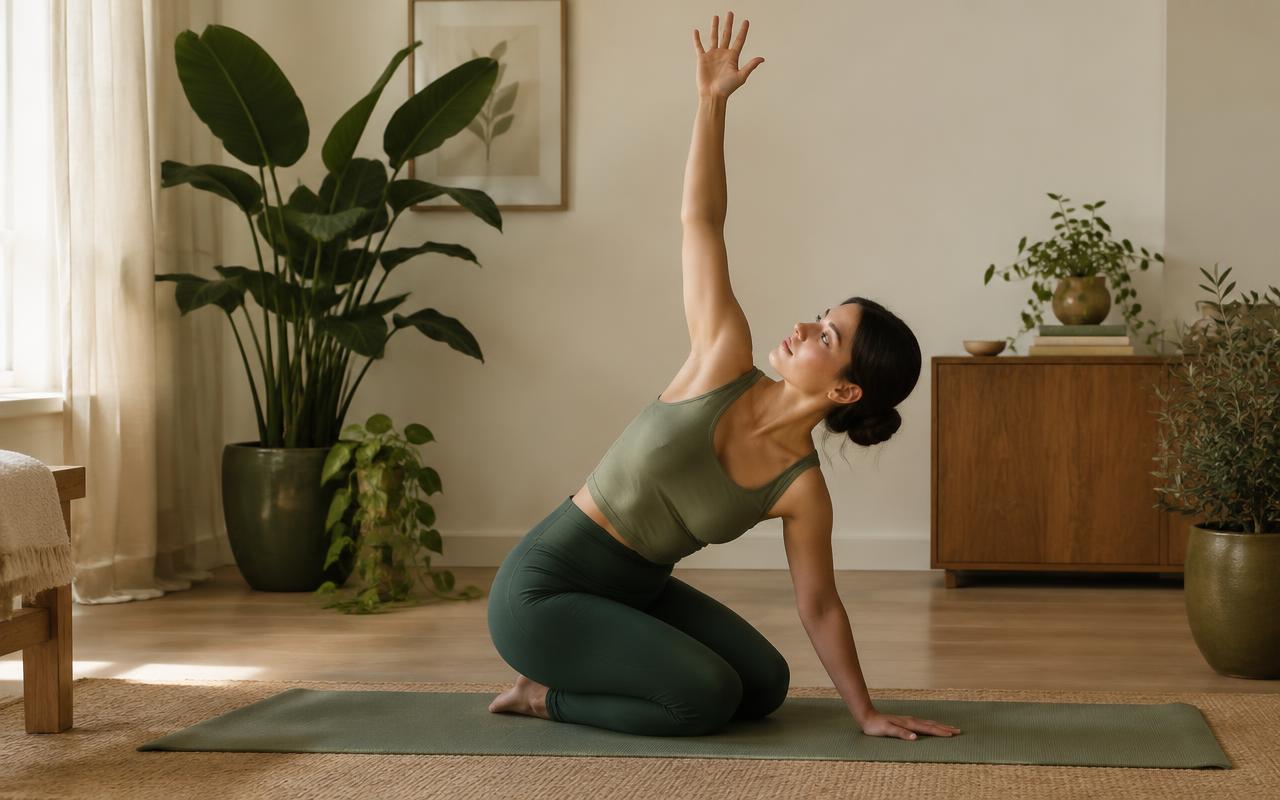
- Seated: sit tall, arms crossed over your chest, and slowly turn your upper body to one side, then the other. Side-lying: lie on your side with knees bent, arms reaching forward, and open the top arm across your body, following it with your eyes.
- Everyday example
- Looking over your shoulder, reaching into the back seat, turning to talk to someone.
- Beginner modification
- Make the turn smaller and use a pillow under your head when lying down.
- Safety
- Move gently. This exercise is not a guaranteed fix for back pain or posture.
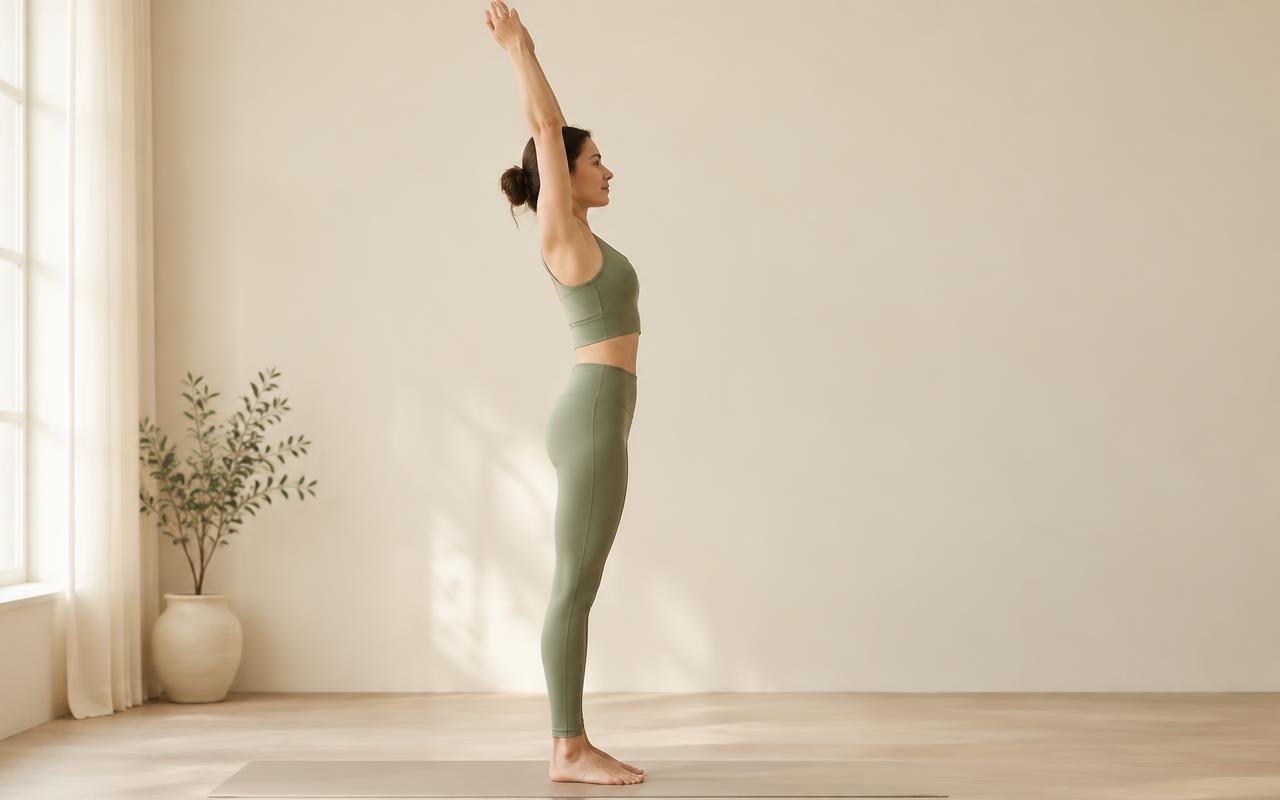
5. Shoulder mobility and overhead reaching
- Main purpose
- Keep comfortable range for reaching and dressing.
- Instructions
- Wall slides: stand facing a wall, forearms on the wall, and slide your arms up as far as is comfortable, then down. Or simply raise your arms forward and up slowly, keeping your ribs from flaring.
- Everyday example
- Reaching a cupboard, putting on a jumper, placing a box on a shelf.
- Beginner modification
- Raise one arm at a time or reduce the range.
- Safety
- Stop short of pinching or sharp pain.
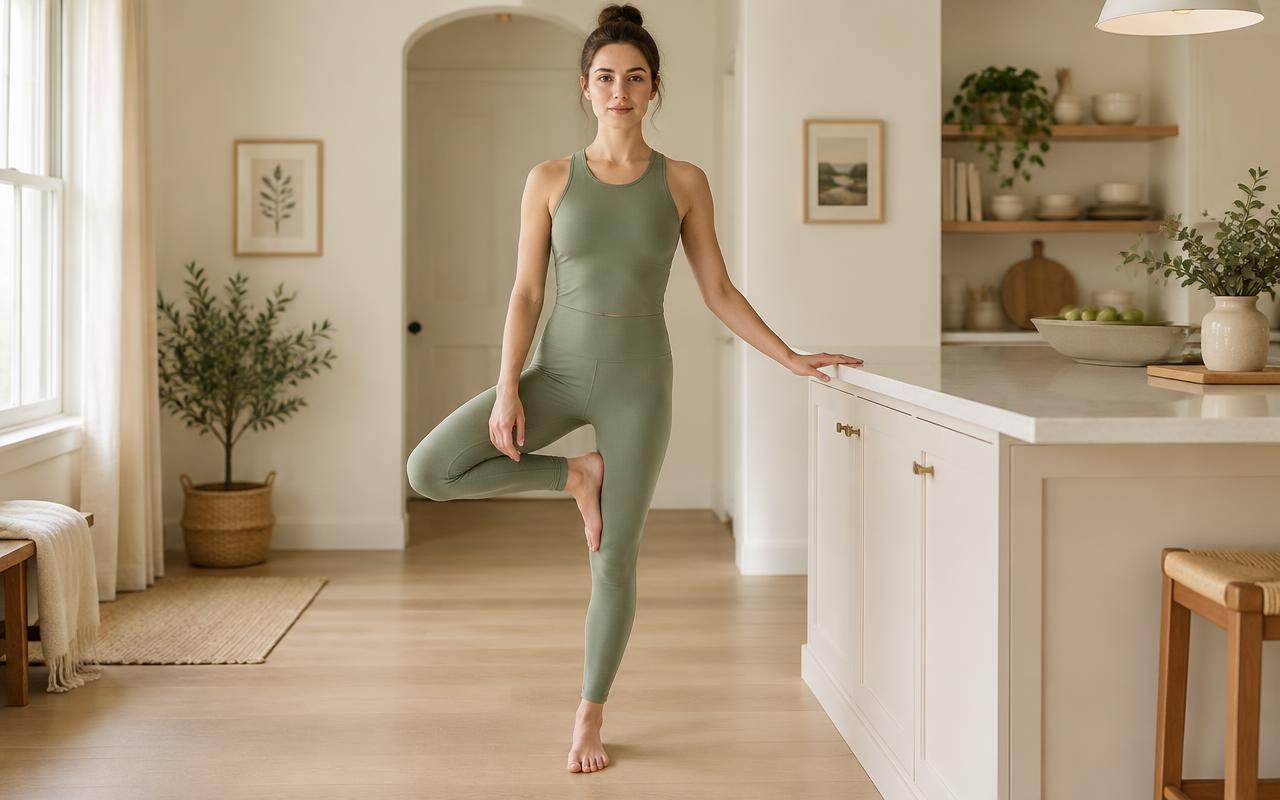
6. Balance practice
- Main purpose
- Practise staying steady on a smaller base of support.
- Instructions
- Stand beside a kitchen counter and lift one foot slightly for 10–20 seconds, or stand heel-to-toe as if on a line.
- Everyday example
- Standing on one leg to put on trousers, or stepping around an obstacle.
- Beginner modification
- Keep both hands on the counter, or let the lifted toes touch the floor.
- Safety
- Always have a stable surface within reach and a clear space around you.
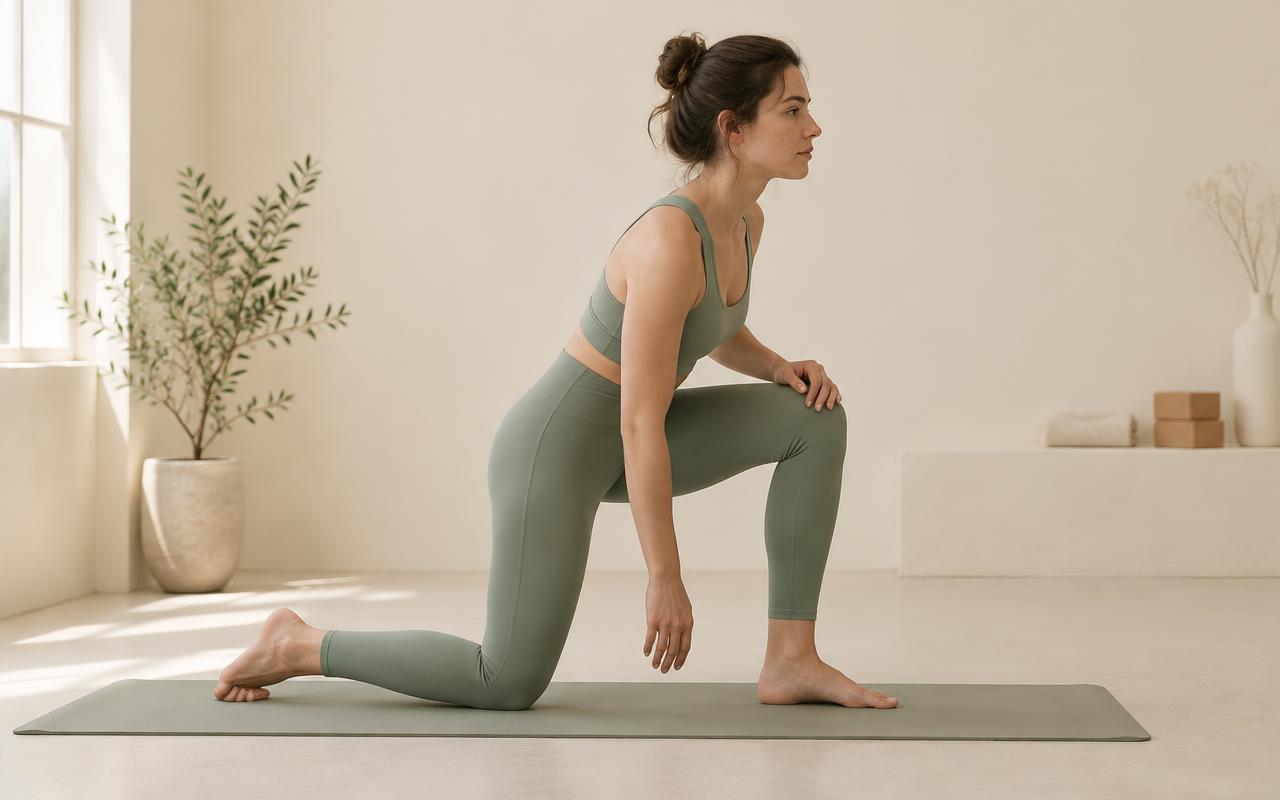
7. Floor-to-stand practice
- Main purpose
- Build confidence getting down to and up from the floor.
- Instructions
- Using a sturdy chair or sofa for support, lower to one knee, then both knees, then sit to one side. Reverse the steps to come back up, using your hands on the chair.
- Everyday example
- Playing with children or pets, reaching under the bed, getting up after sitting on the floor.
- Beginner modification
- Practise only the first stages, such as kneeling onto a cushion and standing back up.
- Safety
- Not everyone should try this without guidance, especially with significant balance difficulties, dizziness or joint problems.
What changes as we age?
Over the years, strength, muscle power (the ability to produce force quickly), balance and mobility can decline, especially if activity levels drop. These abilities all influence how easily we manage daily tasks.
But ageing does not mean inevitable frailty. People can build strength and practise balance at many different ages; the right starting point simply varies. NHS guidance for older adults recommends activities that improve strength, balance and flexibility on at least two days a week, and the World Health Organization recommends that older adults include varied activity that emphasises balance and strength.[1],[2]
Research on Pilates is encouraging but needs careful reading. A 2021 systematic review found that Pilates improved measures of physical performance and balance in older adults, while noting low certainty of evidence for some outcomes. A 2024 review found Pilates improved measured static and dynamic balance, with evidence certainty ranging from very low to moderate.[3],[4]
Improvements in measured balance or function are not the same as proving that exercise prevents every fall or guarantees independence. They are good reasons to keep practising.
A realistic weekly mobility routine
This is an example, not a prescription. Spend 15–25 minutes, two or three times a week:
- Day 1: ankle rocks, thoracic rotation, sit-to-stand (2 × 8), glute bridge (2 × 10), supported balance (3 × 15 seconds per leg).
- Day 2: wall slides, standing hip movements, calf raises (2 × 10), half-kneeling hip stretch, floor-to-stand practice (first stages only).
- Day 3 (optional): a relaxed walk plus your favourite three exercises.
Progress gradually: a few more repetitions, a slightly lower chair, or a few more seconds of balance. Consistency beats intensity. Seek professional assessment for persistent pain, a recent injury, dizziness, or significant balance difficulties.
At STHIRA, we combine strength, mobility and mindful movement in our online coaching and group classes, so you can practise these abilities with guidance.
References and further reading
- [1] NHS. Physical activity guidelines for older adults. nhs.uk. https://www.nhs.uk/live-well/exercise/physical-activity-guidelines-older-adults/
- [2] World Health Organization. Physical activity (fact sheet). who.int. https://www.who.int/news-room/fact-sheets/detail/physical-activity
- [3] Fernández-Rodríguez R, et al. (2021). Pilates improves physical performance and decreases risk of falls in older adults: a systematic review and meta-analysis. Physiotherapy. https://pubmed.ncbi.nlm.nih.gov/34332493/
- [4] de Campos Júnior JF, et al. (2024). Effects of Pilates exercises on postural balance and reduced risk of falls in older adults: a systematic review and meta-analysis. Complementary Therapies in Clinical Practice. https://pubmed.ncbi.nlm.nih.gov/39068875/
- [5] NHS. Strength exercises. nhs.uk. https://www.nhs.uk/live-well/exercise/strength-exercises/