Home Strength Training: A Practical Guide to Getting Stronger Without a Gym
Bodyweight, a pair of dumbbells and a realistic plan. The movement patterns to include, how to progress, and how to keep training when life is busy.
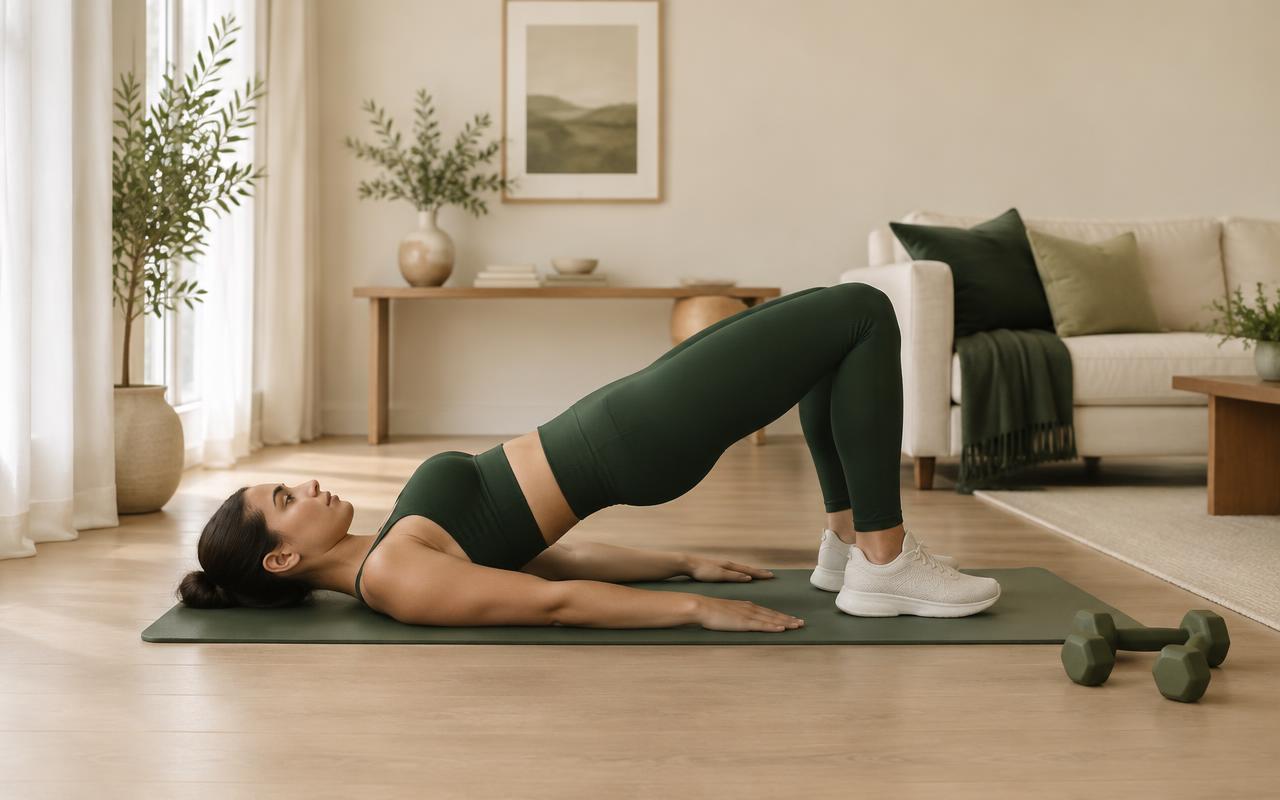
You do not need a gym to get stronger. With a little floor space, your bodyweight, and perhaps a pair of dumbbells, you can build a routine that genuinely works, especially if you are busy or just starting out. This guide explains how home training works, which movements to include, how to use dumbbells sensibly, and how to keep going.
Why home training can work
Muscles respond to challenge. Your bodyweight provides resistance, and dumbbells let you add more as you get stronger. The NHS lists home-friendly exercises such as squats, lunges, push-ups and exercises with weights as ways to strengthen muscles.[3]
Home training is not always better than gym training; both can work. Results depend on consistency, choosing the right exercises, enough resistance, recovery, and gradually making things harder over time. The big advantage of home training is that it removes travel time, which makes it easier to stay consistent.
Public-health guidance recommends muscle-strengthening activities that work all the major muscle groups on at least two days a week, alongside regular aerobic activity.[1],[2]
The major movement patterns
Instead of thinking about individual muscles, think about movement patterns: the basic shapes of everyday movement.
- Squat or sit-to-stand: bending hips and knees, as when getting out of a chair.
- Hip hinge: bending forward from the hips with a long spine, as when picking up a bag or pulling weeds.
- Push: pressing away from you, as when pushing a heavy door or getting up from the floor. Examples: wall or incline push-ups.
- Pull: drawing towards you, as when opening a heavy drawer or lifting a bag from the car. Example: a one-arm dumbbell row.
- Step or lunge: one leg leading, as when climbing stairs. Example: step-ups onto a low, stable step.
- Carry: holding and walking, as when carrying groceries. Example: suitcase or farmer's carry.
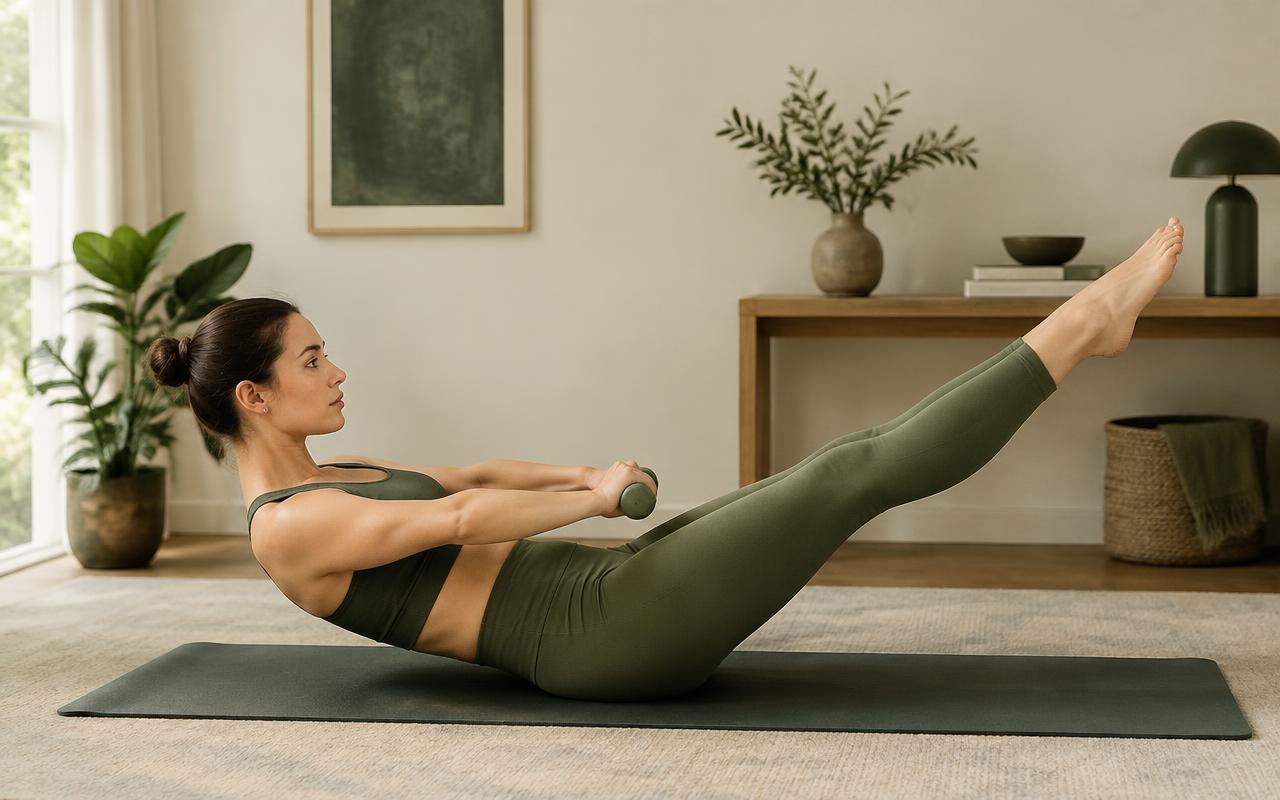
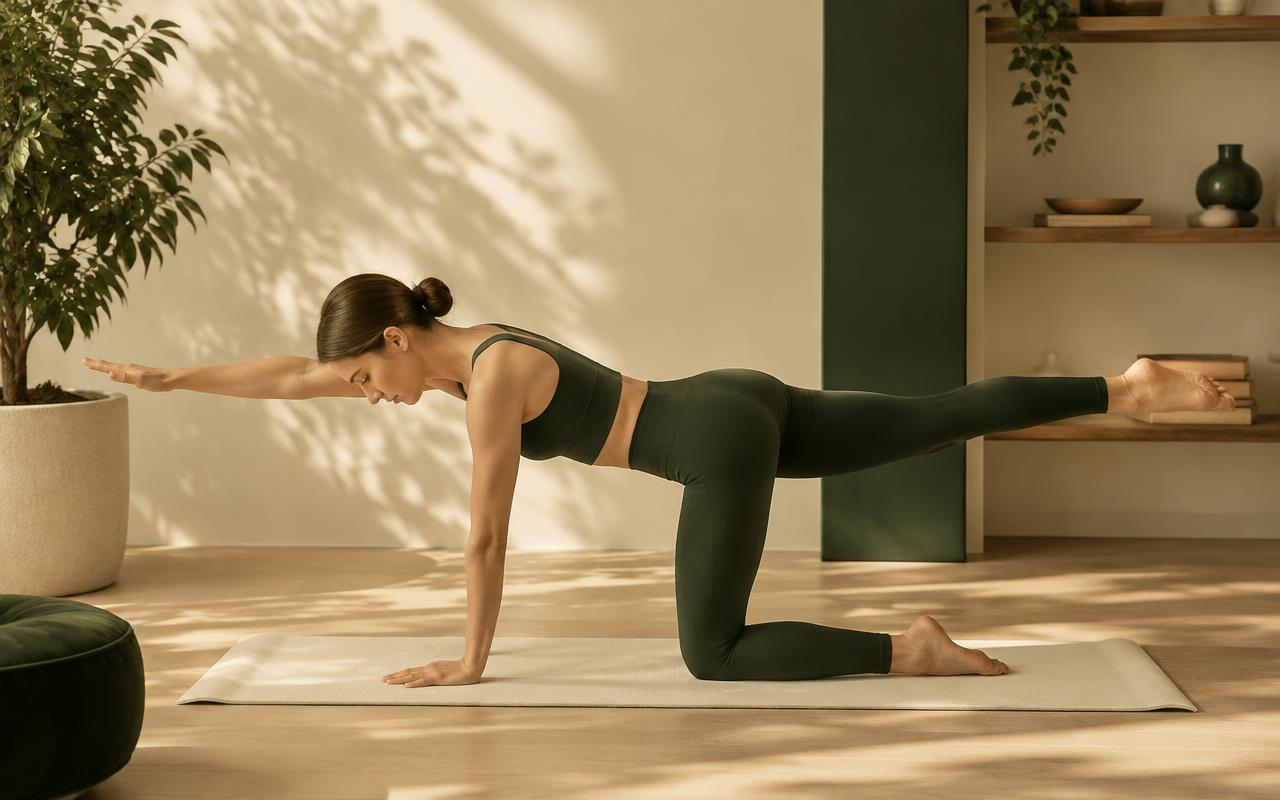
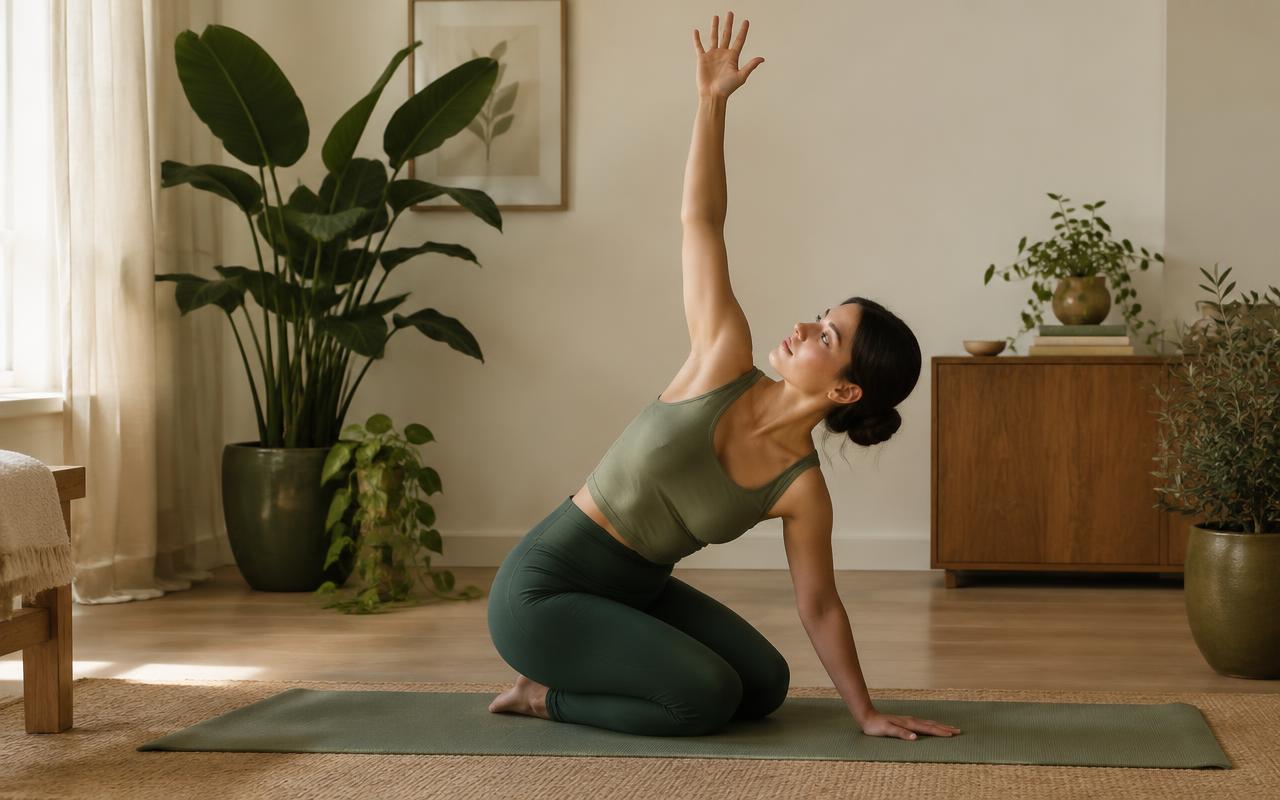
- Trunk control: keeping the middle steady, as when reaching or twisting. Examples: dead bug, bird dog, side plank.
How to use dumbbells
Dumbbells add resistance to the patterns above: hold one at your chest for squats, two at your sides for hip hinges (Romanian deadlifts), one in a hand for rows, and one or two for carries.
- Learn the movement first with bodyweight or a very light weight.
- Choose a load you can control through the whole movement, including the lowering phase.
- Aim to finish each set feeling you could do two or three more good repetitions.
- Progress gradually: add repetitions first, then a little weight.
- If your form changes a lot, your breath stops, or you need to swing the weight, it is too heavy for now.
A pair of light and a pair of moderate dumbbells is a very flexible starting kit. Bodyweight alone is enough to begin.
How to build a routine
Here is an example beginner full-body session. It is general educational information, so adapt it to your needs.
Warm-up (5 minutes)
- March on the spot or walk around.
- Arm circles and gentle trunk rotations.
- 5 slow bodyweight squats and 5 hip hinges.
Main session
- Squat or sit-to-stand: 2–3 sets of 8–12. Easier: sit-to-stand from a higher chair.
- Dumbbell hip hinge: 2–3 sets of 8–10. Easier: hands on thighs, no weight.
- Incline push-up (hands on a counter or table): 2–3 sets of 6–10. Easier: wall push-up.
- One-arm dumbbell row: 2–3 sets of 8–10 per side. Easier: lighter weight or a resistance band.
- Suitcase carry: 2–3 walks of 20–30 steps per side. Easier: lighter weight.
- Dead bug: 2 sets of 5–6 per side. Easier: heel slides.
Rest 45–90 seconds between sets. When you can do the top of the repetition range with good control for two sessions in a row, it is time to progress: add a repetition, a set, slightly more weight, or a slower lowering phase.
How hard should it feel?
For strength to improve, the work needs to be challenging, but not so hard that technique falls apart. A simple way to judge this is “reps in reserve”: at the end of a set, ask yourself how many more good repetitions you could have done. For most beginners, finishing with about two or three in reserve is a sensible target. It feels like real effort, yet you stay in control.
Your effort will vary from day to day. After a poor night's sleep or a stressful week, it is fine to use a lighter weight or do one set fewer. Training is a long game, and adjusting is not failing.
Common mistakes to avoid
- Doing too much in the first week, then feeling so sore that you skip the next two.
- Only training the exercises you enjoy, for example lots of squats but no pulling.
- Rushing repetitions so the weight swings instead of being controlled.
- Never changing anything, so the routine stops being a challenge.
- Changing everything every session, so you never get better at any movement.
Some muscle soreness a day or two after a new exercise is common and usually eases as your body adapts. Sharp pain, pain in a joint, or pain that lingers is a signal to stop that exercise and get advice.
Strength, mobility and mindful movement together
Strength training does not need to be rushed. Moving with control helps you feel which muscles are working, notice compensations, and use a range of motion you can own. That is the Pilates-inspired part of how we coach.
This does not mean every repetition must be painfully slow or that there is one perfect posture for everyone. Bodies differ, and good technique allows for natural variation. Mobility work, such as hip, ankle and upper-back movements, complements strength training by helping you move comfortably through the ranges your exercises need.
Consistency and realistic progress
- Schedule sessions like appointments, even if they are short.
- Have a 15-minute “minimum” version for busy days, for example three exercises for two sets.
- Track what you did: exercises, repetitions and weight. Seeing progress is motivating.
- Recover well: sleep, eat enough, and leave about a day between hard sessions for the same muscles.
- Expect gradual change. Strength often improves noticeably over the first weeks and months, but everyone progresses differently.
A sample week
- Monday: full-body strength (30 minutes).
- Tuesday: 20–30 minute walk.
- Wednesday: mobility and balance (15 minutes).
- Thursday: full-body strength (30 minutes).
- Saturday: a longer walk or an active outing; optional third strength session.
If you would like a home programme built around your body, equipment and schedule, explore our online 1:1 coaching and weekly group classes.
References and further reading
- [1] World Health Organization. Physical activity (fact sheet). who.int. https://www.who.int/news-room/fact-sheets/detail/physical-activity
- [2] NHS. Physical activity guidelines for adults aged 19 to 64. nhs.uk. https://www.nhs.uk/live-well/exercise/physical-activity-guidelines-for-adults-aged-19-to-64/
- [3] NHS. Strength exercises. nhs.uk. https://www.nhs.uk/live-well/exercise/strength-exercises/